
Introduction to Medical Motion Control Engineering
Motion control in medical devices and laboratory automation equipment requires strict adherence to precision, thermal management, and acoustic emission standards. Engineers designing diagnostic analyzers, infusion pumps, and imaging tables operate under tight regulatory and functional constraints. Unlike standard industrial machinery, medical applications leave zero room for positional errors, mechanical stalling, or excessive environmental interference. Stepper motors provide a reliable baseline for these critical applications because they translate digital pulse signals into exact mechanical increments without requiring complex continuous feedback loops. This direct correlation between command pulses and physical movement allows medical equipment manufacturers to design highly repeatable, compact, and efficient actuation axes.
1. Fluid Administration: Syringe, Peristaltic, and Infusion Pumps
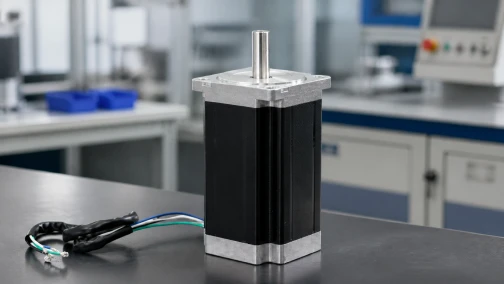
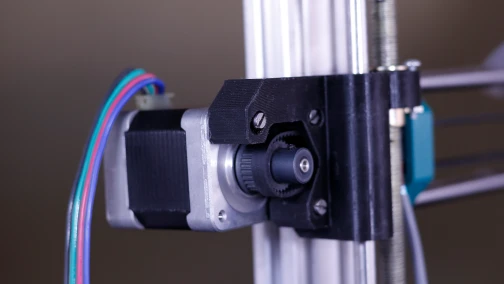
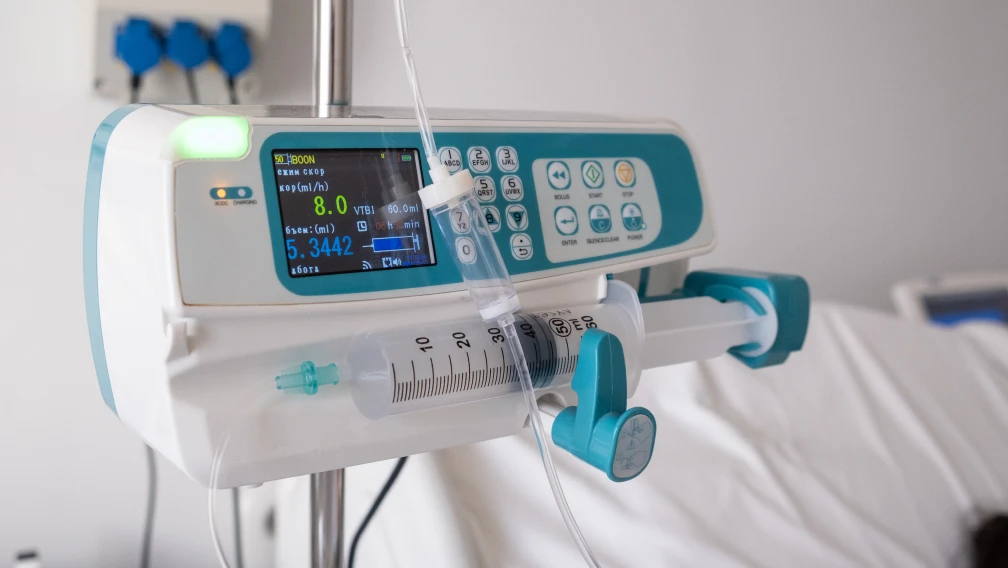
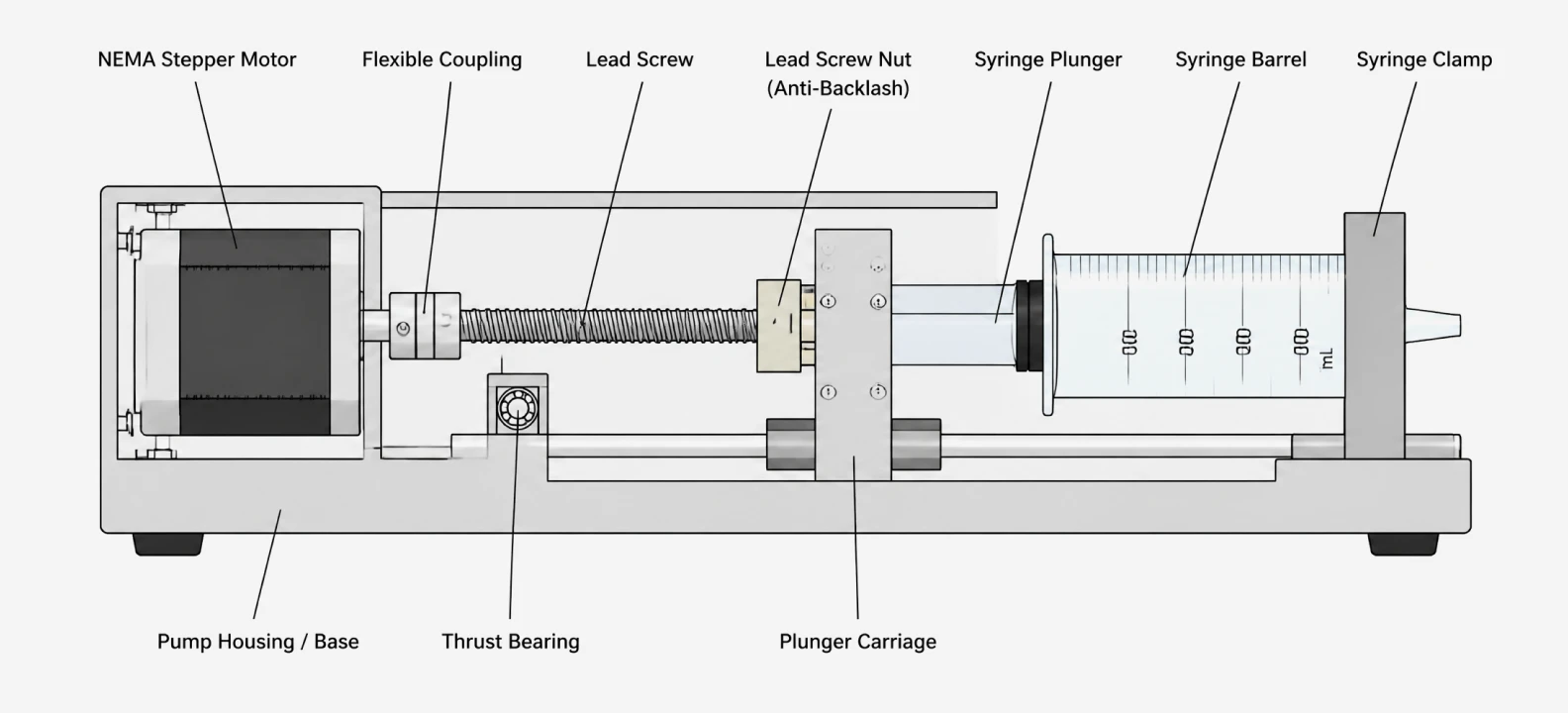
Intravenous therapy, dialysis machines, and micro-fluidic dosing systems rely entirely on exact, predictable flow rates. The actuation core of these systems is typically a stepper motors configuration. A standard hybrid stepper operates in defined mechanical step angles, most commonly 1.8 degrees or 0.9 degrees per step. When paired with a precision lead screw or ball screw, this rotational increment converts into highly resolute linear displacement. This mechanism allows a syringe pump to dispense trace amounts of medication without fluid pulsation, ensuring a uniform delivery rate that is critical for patient safety.
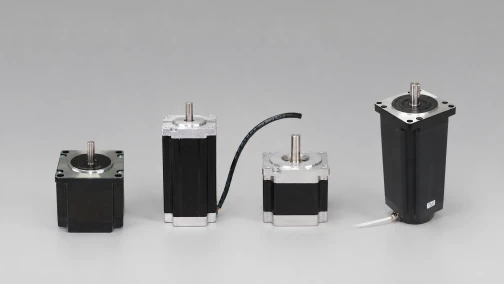
A critical metric for fluid administration is low-speed torque stability. Peristaltic pumps often operate at extremely low velocities, sometimes below 10 RPM. At these speeds, maintaining a consistent rotational velocity without cogging or torque ripple is necessary to prevent variations in flow rate. Furthermore, stepper motors possess high inherent holding torque when powered but stationary. This characteristic acts as an electronic brake, preventing accidental fluid backflow or syphon effects when the pump is paused. Medical designers frequently select NEMA 8, NEMA 11, or NEMA 14 frame sizes for portable infusion devices due to their compact footprint, while NEMA 17 or NEMA 23 frames are deployed in stationary dialysis equipment requiring higher continuous thrust forces.
2. In Vitro Diagnostics (IVD) and Laboratory Automation
Clinical chemistry analyzers, hematology testing machines, and automated blood screening lines process thousands of biological samples daily. These machines utilize multi-axis gantries to drive sample carousels, reagent dispensing probes, and pipetting mechanisms. Positional repeatability is the defining requirement in this sector. A stepper motor must index a turntable to the exact same optical coordinate repeatedly over millions of cycles. Accurate indexing prevents probe collisions, ensures exact needle insertion depths, and eliminates the risk of cross-contamination between adjacent test tubes.
In laboratory automation, the Z-axis (vertical probe movement) requires rapid acceleration for high throughput, followed by a sudden, rigid stop to prevent fluid splashing. Open-loop stepper systems execute these indexing tasks reliably because the mechanical load is predictable and constant. Engineers utilize S-curve acceleration profiles within the motion controller to manage the inertia of the fluid-filled probes, allowing the stepper motor to reach high traverse speeds between testing stations and decelerate smoothly before the pipetting sequence begins. This controlled motion profile minimizes fluid meniscus oscillation, ensuring optical sensors register accurate liquid levels.
3. Acoustic Emission and Thermal Management in Enclosed Environments
Hospitals, intensive care units (ICUs), and diagnostic laboratories enforce strict acoustic noise regulations. A standard 2-phase stepper motor moving at low speeds can generate mechanical resonance and audible noise, primarily due to the discrete nature of its step transitions. To mitigate this in medical settings, engineering teams deploy advanced microstepping drives. Microstepping electronically divides a standard mechanical step into hundreds of micro-increments (e.g., 256 microsteps per full step). This creates a near-sinusoidal current waveform, smoothing the rotor transition and pushing acoustic output frequencies below the threshold of human perception.
Physical motor construction also adapts to noise constraints. High-precision rotor balancing, optimized stator lamination geometry, and medical-grade pre-loaded bearings are utilized to eliminate physical resonance and structural vibration. Beyond acoustics, thermal management dictates motor selection. Medical devices are densely packed and often lack active cooling fans to prevent the circulation of airborne pathogens. Stepper motors configured with low-resistance copper windings minimize I²R power losses. Drive electronics are calibrated to supply only the exact current required for the specific load profile. This keeps the motor housing temperature stable, protecting temperature-sensitive biological samples and chemical reagents located near the actuation axis from thermal degradation.
4. Stepper Motors vs. Brushless DC (BLDC) in Medical Design
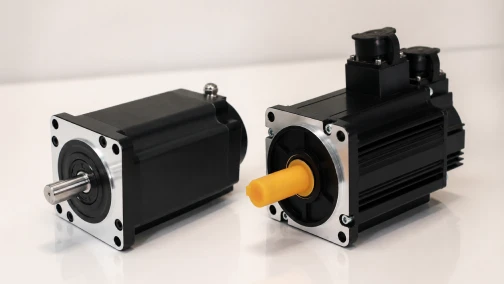
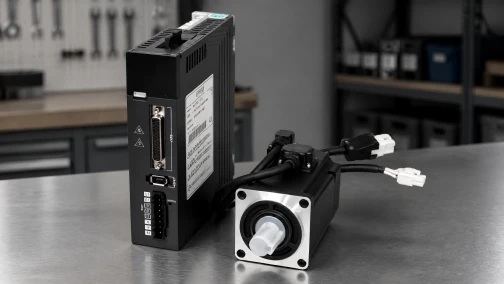
When specifying motion axes, designers frequently evaluate stepper motors against Brushless DC (BLDC) and AC servo options. BLDC motors offer high rotational speeds and high electrical efficiency. However, they lack native magnetic holding torque. To hold a fixed position or move at the very low speeds required by medical dosing pumps, a BLDC system requires a high-resolution absolute encoder, a mechanical reduction gearbox, and a highly tuned PID controller. This architecture adds significant component cost, mechanical bulk, and software complexity to the medical device.
Stepper motors naturally excel at low-speed, high-torque operations. The high pole count of a hybrid stepper motor (typically 50 physical poles) allows it to lock into place electromagnetically. This provides rigid standstill stability without the continuous positional hunting or dithering seen in servo-driven BLDC setups. For applications like optical scanning in MRI machines or laser positioning in ophthalmic equipment, dead-still stability is required to capture clear, distortion-free images. The stepper motor delivers this stability natively, reducing the overall complexity of the control system.
5. Closed-Loop Stepper Integration for Failsafe Operation
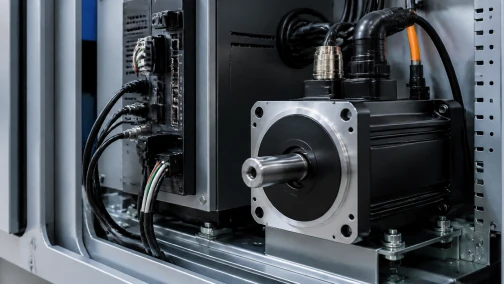
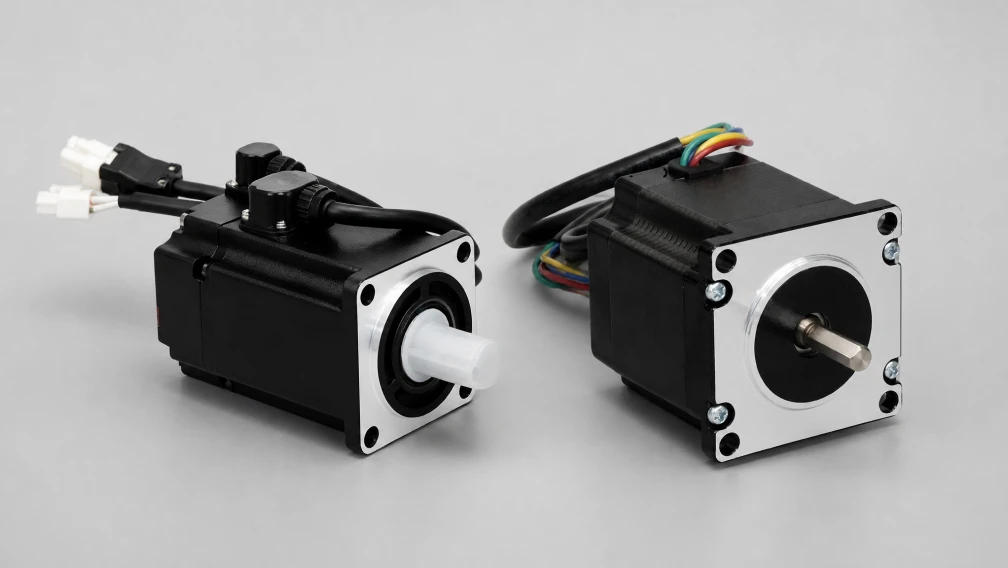
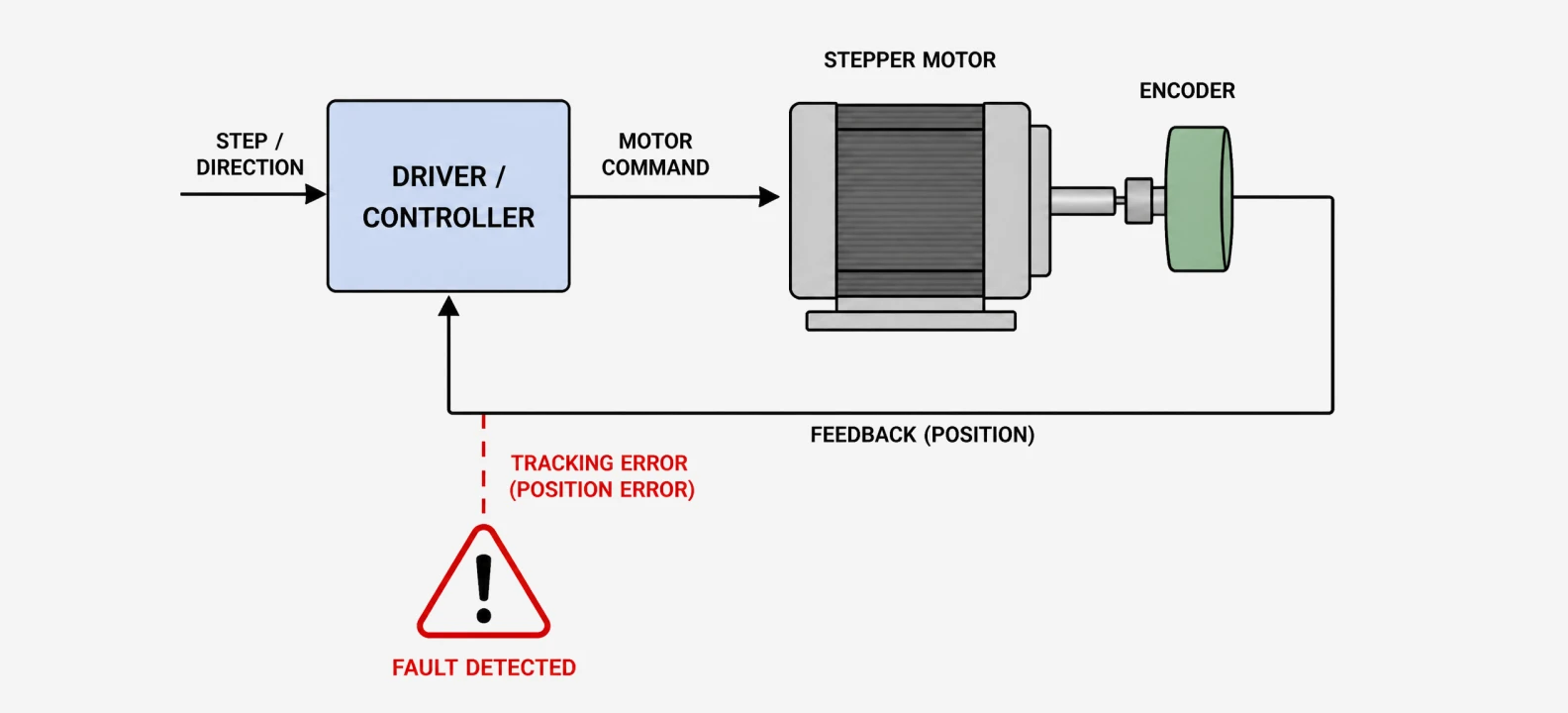
While open-loop control handles standard laboratory indexing efficiently, life-critical applications require definitive positional verification. To meet these safety standards, engineers integrate high-resolution optical or magnetic encoders to create closed-loop stepper motor networks. This architecture monitors the actual physical position of the rotor in real-time and compares it against the commanded trajectory.
If a mechanical jam occurs—such as a blocked fluid line in a pump or a mechanical obstruction in an automated surgical tool—the closed-loop drive detects the tracking error immediately. It can dynamically increase phase current to overcome the obstacle. If the obstruction persists, the drive triggers an instantaneous system fault, stopping the machine and alerting the medical staff. This closed-loop functionality provides the safety guarantees of a full servo system while maintaining the low-speed torque characteristics and cost-efficiency of a stepper motor.
6. Environmental Compatibility and Sterilization Requirements
Medical and laboratory equipment operates in environments exposed to harsh chemicals, sterilization processes, and biological washdowns. Stepper motors specified for these areas must meet strict ingress protection (IP) ratings, often IP65 or IP67, to prevent fluid, dust, and particulate ingress. Motor housings are frequently treated with specialized anti-corrosive coatings, anodized aluminum, or constructed from high-grade stainless steel to withstand repeated exposure to hospital-grade disinfectants and autoclave sterilization cycles.
Furthermore, motors operating inside vacuum chambers, mass spectrometers, or highly sensitive optical diagnostic equipment must utilize vacuum-compatible greases and low-outgassing stator insulation materials. Standard industrial lubricants can vaporize in low-pressure environments, coating nearby optical lenses and ruining diagnostic accuracy. Specifying medical-grade internal components ensures the motor functions reliably without contaminating the surrounding analytical environment or degrading the integrity of the test results.
Partnering for Medical Motion Control Solutions
Selecting the correct motor architecture is the foundation of reliable medical device design. Cymotorix engineers and manufactures hybrid stepper motors, closed-loop systems, and servo platforms specifically tailored for the demanding operational envelopes of the medical and laboratory sectors. From custom shaft modifications and integrated lead screws to specialized medical cabling and private labeling, our engineering team works directly with OEMs to validate performance parameters. Contact our application engineers today to review your load requirements, thermal limits, and torque profiles to secure the optimal actuation solution for your next generation of medical equipment.
Frequently Asked Questions (FAQ)
Question: What is the primary operational advantage of using a stepper motor in a medical syringe pump?
Answer: Stepper motors deliver exceptionally high holding torque at low speeds and execute movements in exact, fixed angular increments. This allows the pump mechanism to deliver micro-liters of fluid smoothly without mechanical pulsation, and securely hold the plunger position when the pump is deactivated, preventing any accidental fluid syphon.
Question: How do engineers reduce the operating noise of stepper motors in intensive care units (ICUs)?
Answer: Noise reduction is achieved through both electrical and mechanical engineering. Electrically, advanced microstepping drives smooth out the phase current waveforms, preventing harsh step transitions. Mechanically, the motors are built with high-precision bearings, balanced rotors, and optimized stator geometries to eliminate physical resonance and structural vibration.
Question: Why do medical designers often avoid standard AC servo motors in basic laboratory indexing turntables?
Answer: AC servo motors rely on continuous error correction via a PID control loop, which can cause micro-dithering or "hunting" at a standstill as the motor constantly seeks absolute zero error. Stepper motors lock into a magnetic detent naturally, remaining perfectly still. This deadband stability is required for precise optical scanning and reagent pipetting.
Question: Can stepper motors operate safely in enclosed diagnostic devices without overheating the biological samples?
Answer: Yes, provided the electrical current profile is correctly optimized. Engineers design medical-specific stepper motors with low-resistance copper windings and calibrate the closed-loop drive to supply only the minimum current required for the active load. This prevents excess electrical energy from converting into waste heat inside the enclosure.
Question: What specific sizes of stepper motors are most commonly integrated into portable medical equipment?
Answer: NEMA 8, NEMA 11, and NEMA 14 frame sizes are the industry standards for portable and point-of-care medical devices. These highly compact frames deliver sufficient torque to drive miniature fluid pumps, valves, and optical lenses while fitting within the strict spatial limitations of handheld or bedside equipment.
Question: Do hybrid stepper motors used in automated laboratory environments require regular mechanical maintenance?
Answer: Hybrid stepper motors are inherently brushless devices. The only internal wearing components are the mechanical ball bearings supporting the rotor shaft. When properly sized for the radial and axial loads of the specific medical application, these motors operate entirely maintenance-free for the complete lifecycle of the medical instrument.
-

Cymotorix
Stepper Motor & Servo Motor Manufacture
Cymotorix is a China-based motor manufacturer with 20+ years of experience producing hybrid stepper motors, AC servo motors, and matched drivers for OEM customers worldwide.