Closed Loop Stepper Motor: How It Works, Driver, and When You Need One
A working reference for engineers and procurement teams deciding between open-loop steppers, closed loop steppers, and servos. It covers how the feedback loop works, what it fixes, the driver it needs, and how to tell whether your application actually calls for one.
How a Closed Loop Stepper Motor Works
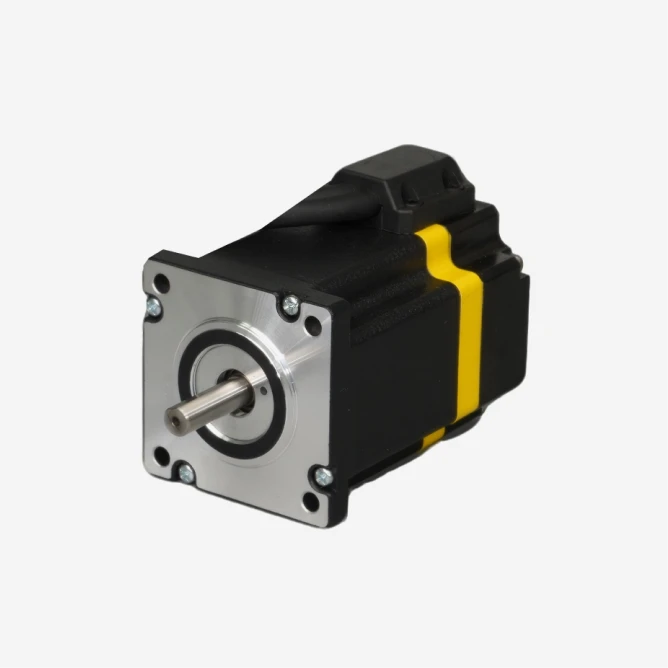
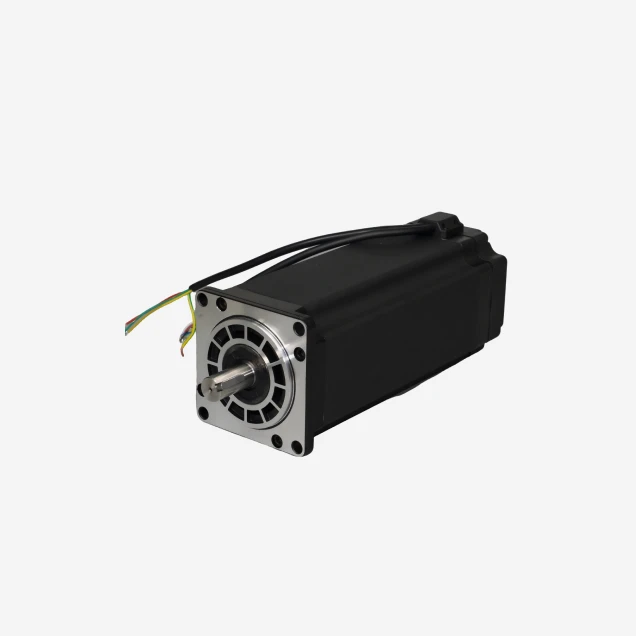
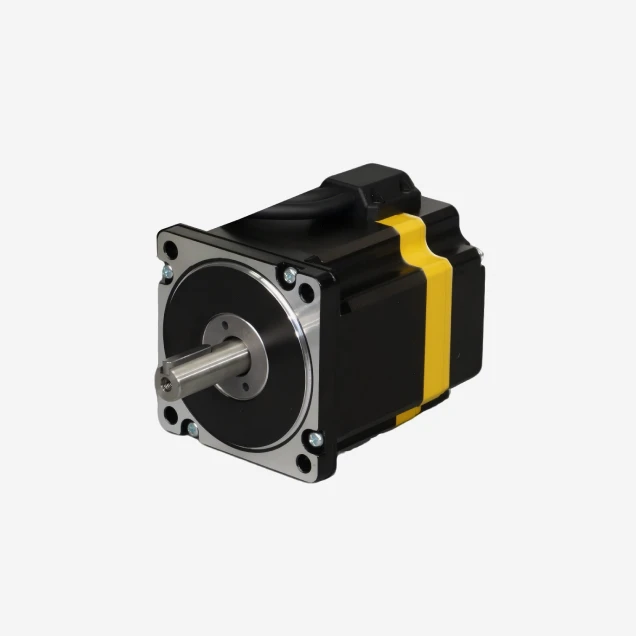
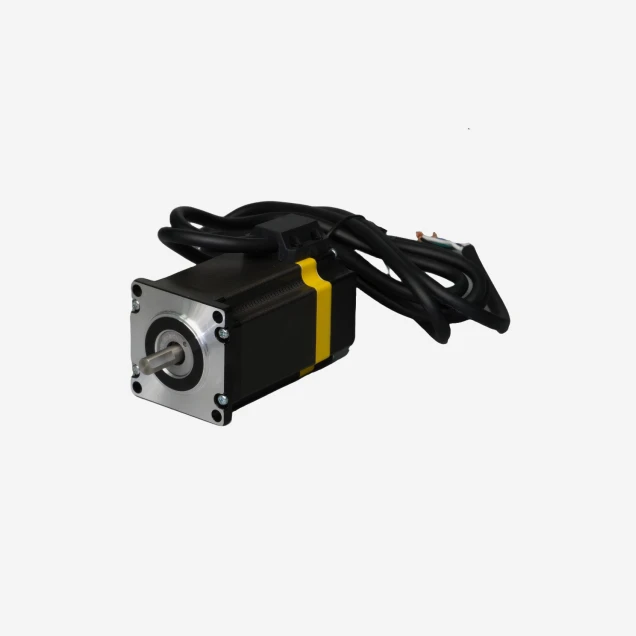
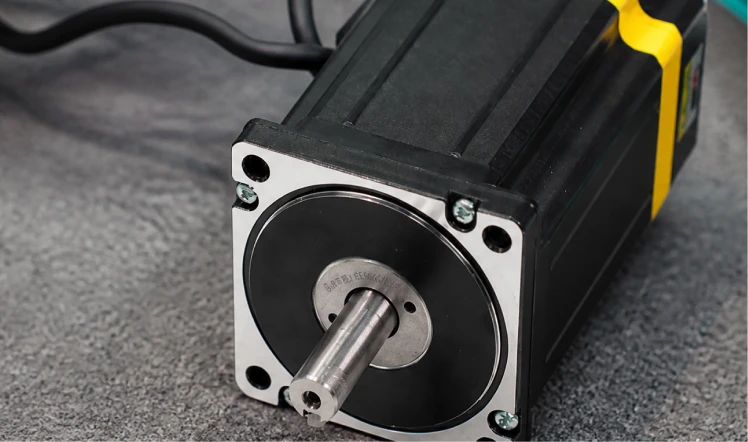
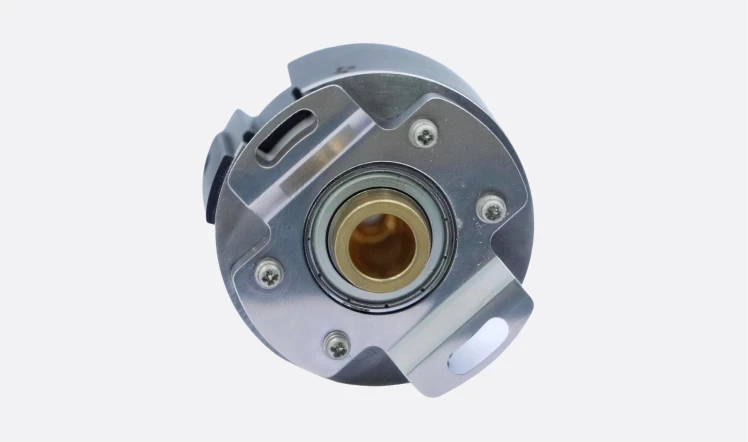
A closed loop stepper motor is a hybrid stepper with an encoder on the shaft. The encoder reports the rotor's actual position; the driver compares that against the commanded position and acts on the difference. If the rotor falls behind — because the load grew, the move was too fast, or there was a sudden disturbance — the driver adds current or steps in real time to pull it back on target. Below the error threshold the motor behaves like a normal stepper and draws only the current it needs, which also keeps it cooler and quieter than an open-loop motor running at full current all the time.
What the Encoder Actually Fixes: Lost Steps
The whole point of the feedback loop is lost-step protection. In an open-loop system, when required torque exceeds holding torque at that speed, the rotor skips to the next stable position. Each skip is unaccounted error — and the controller has no way to know it happened. On a CNC router the toolpath drifts and the part is scrapped; on a pick-and-place head the placement misses. The operator only finds out after the damage is done. A closed loop stepper motor removes that failure mode entirely: the encoder sees the rotor lagging and the driver corrects before the error accumulates.
Closed Loop Stepper vs Open Loop vs Servo
| Open Loop Stepper | Closed Loop Stepper | AC Servo |
|---|
| Feedback | None | Encoder | Encoder |
| Lost steps | Possible | Corrected | None |
| Holding torque at rest | High | High | Lower, can hunt |
| High-speed performance | Drops off | Better than open loop | Best |
| Heat / efficiency | Full current always | Current matched to load | Current matched to load |
| Cost | Lowest | Middle | Highest |
The closed loop stepper sits between the two: it removes the open-loop motor's biggest weakness without the cost and tuning of a full servo. For hold-and-index motion that just can't afford a missed step, it's usually the right call.
The Driver and Encoder
A closed loop stepper motor needs a matched closed loop stepper driver — the driver reads the encoder and closes the position loop, which an open-loop driver can't do. Standard feedback is a 1000-line incremental encoder; for finer resolution or position memory through a power cut, an absolute encoder is the option. Two things worth confirming at selection:
- Encoder resolution: match it to the positioning accuracy the application needs, not higher than necessary.
- Driver pairing: motor and driver work as a set — we supply them matched so commutation and tuning are already done.
When You Actually Need a Closed Loop Stepper
Don't over-engineer. An open-loop stepper is fine for steady, known loads at moderate speed. Reach for a closed loop stepper motor when one or more of these is true:
- The load varies and a missed step would scrap the part or batch — CNC routers, engravers, machine-tool axes.
- The machine runs unattended and an error can't be caught by an operator in time.
- Throughput is high with fast, frequent direction changes — pick-and-place, indexing, sorting.
- You want a servo-grade result on hold-and-index motion without the servo's cost and tuning.
Send us the load, the speed target, and the accuracy you need, and our engineers confirm the frame, torque, and encoder before you order.
Where Closed Loop Stepper Motors Are Used
The anti-lost-step reliability makes these motors a fit for desktop and benchtop CNC, pick-and-place heads at low to moderate speed, light automation and assembly lines, AGV steering and gripper mechanisms, and stage lighting or camera pan-tilt rigs. Smaller frames (NEMA 23–24) handle precision axes; larger frames (NEMA 34–42) take the higher-torque axes that can't tolerate a missed step.