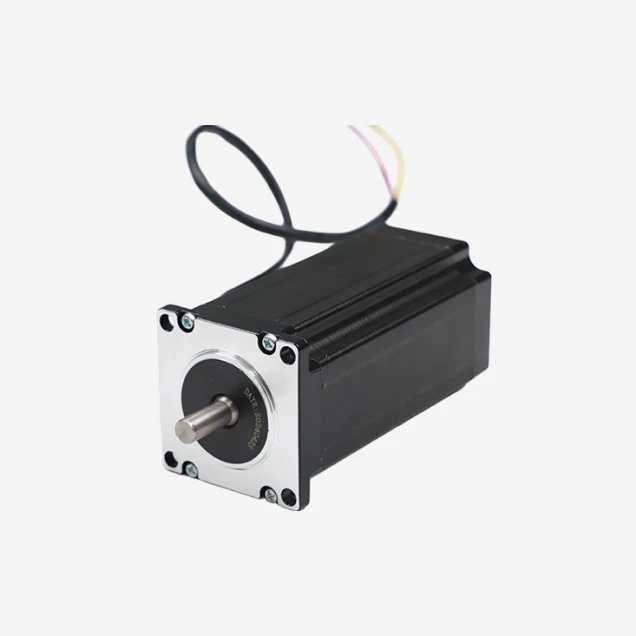
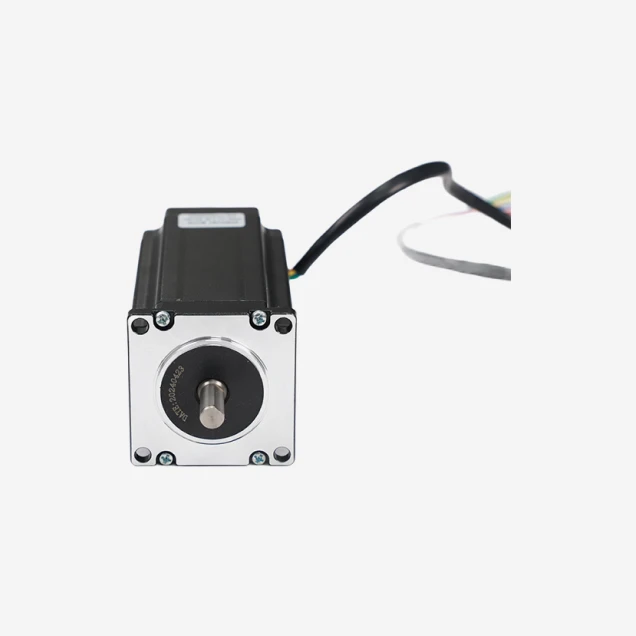
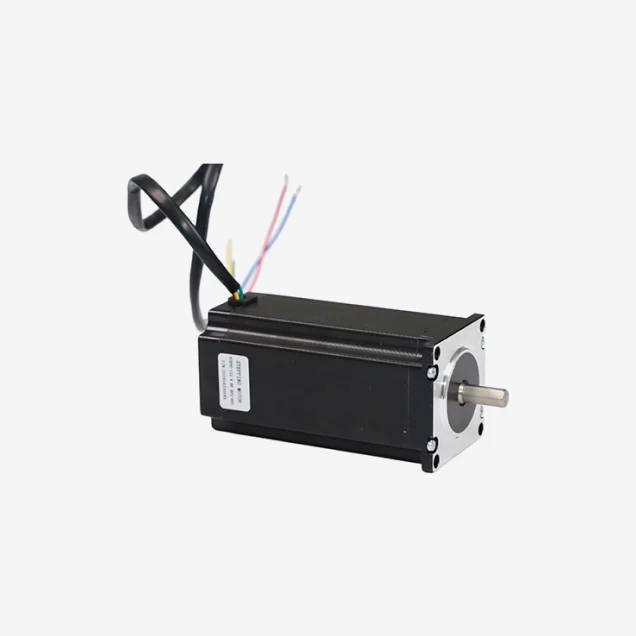
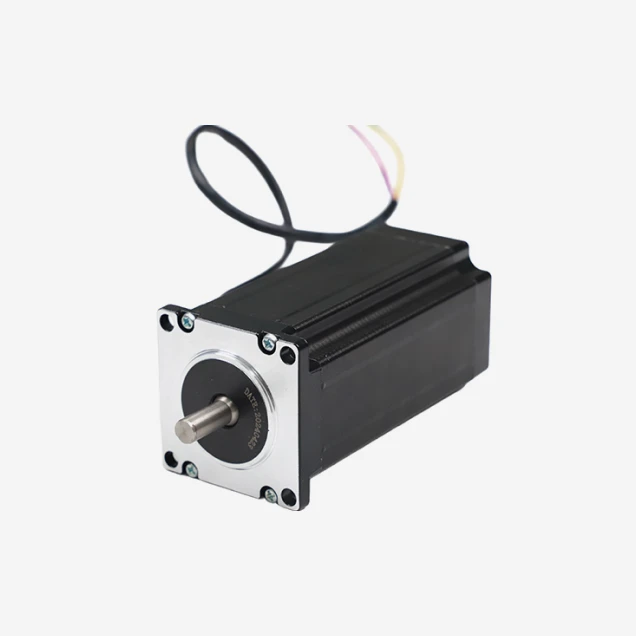
3-Phase NEMA 23 Stepper Motor: Smoother, Faster Motion in a 57mm Frame
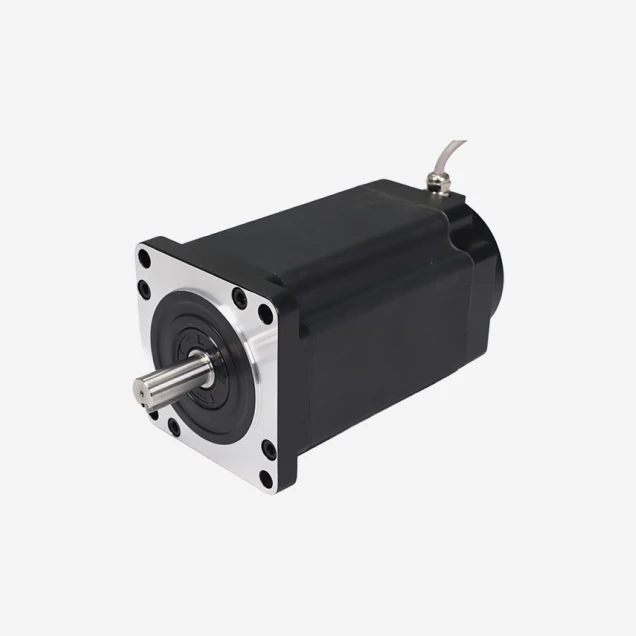
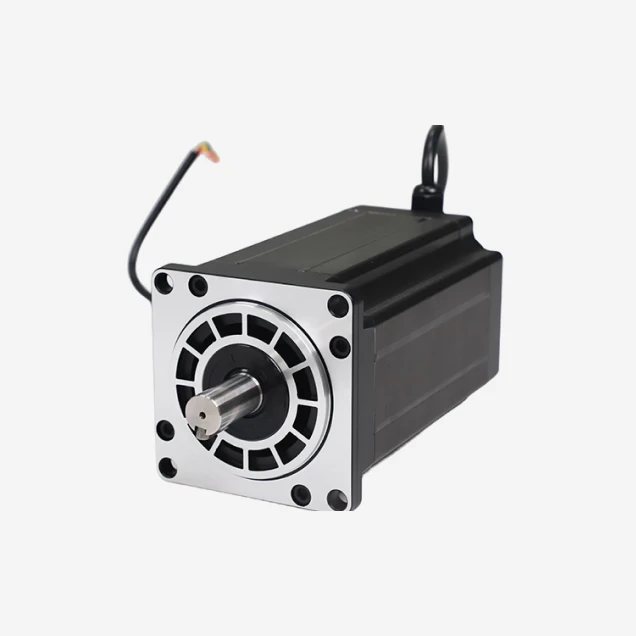
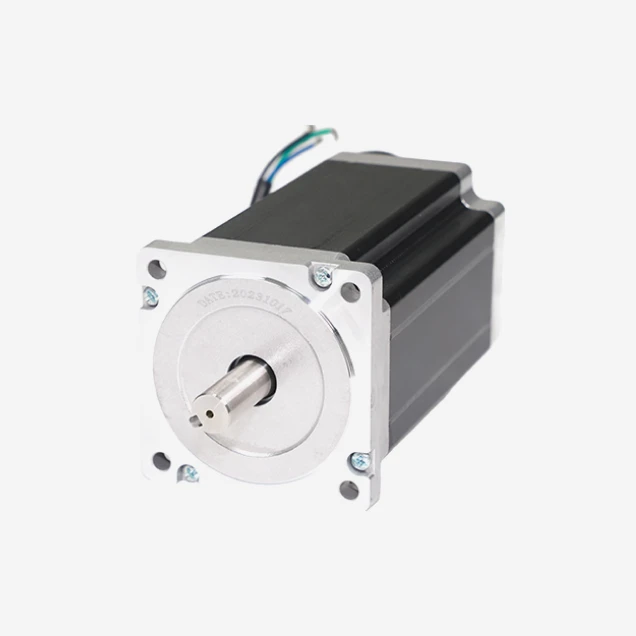
The 3-phase NEMA 23 stepper motor is a 57mm hybrid stepper built with three windings rather than two. The extra phase produces a smoother current waveform, which lowers vibration and resonance and lets the motor hold torque better at high speed. It runs at a 1.2° step angle (300 steps per revolution) and needs a 3-phase stepper driver. For machines where a 2-phase motor's vibration or mid-band resonance is a problem, the 3-phase NEMA 23 is the fix. Holding torque runs from about 0.7 N·m to 1.5 N·m depending on body length. For more torque, the NEMA 34 3-phase is the next size up.
Key Specifications at a Glance
| Parameter | Specification |
|---|
| Frame Size | 57 × 57 mm |
| Step Angle | 1.2° (300 steps/rev) |
| Phase | 3-phase |
| Holding Torque | 0.7–1.5 N·m |
| Rated Current | 3.0–5.0 A/phase |
| Body Length | 56–112 mm (varies by model) |
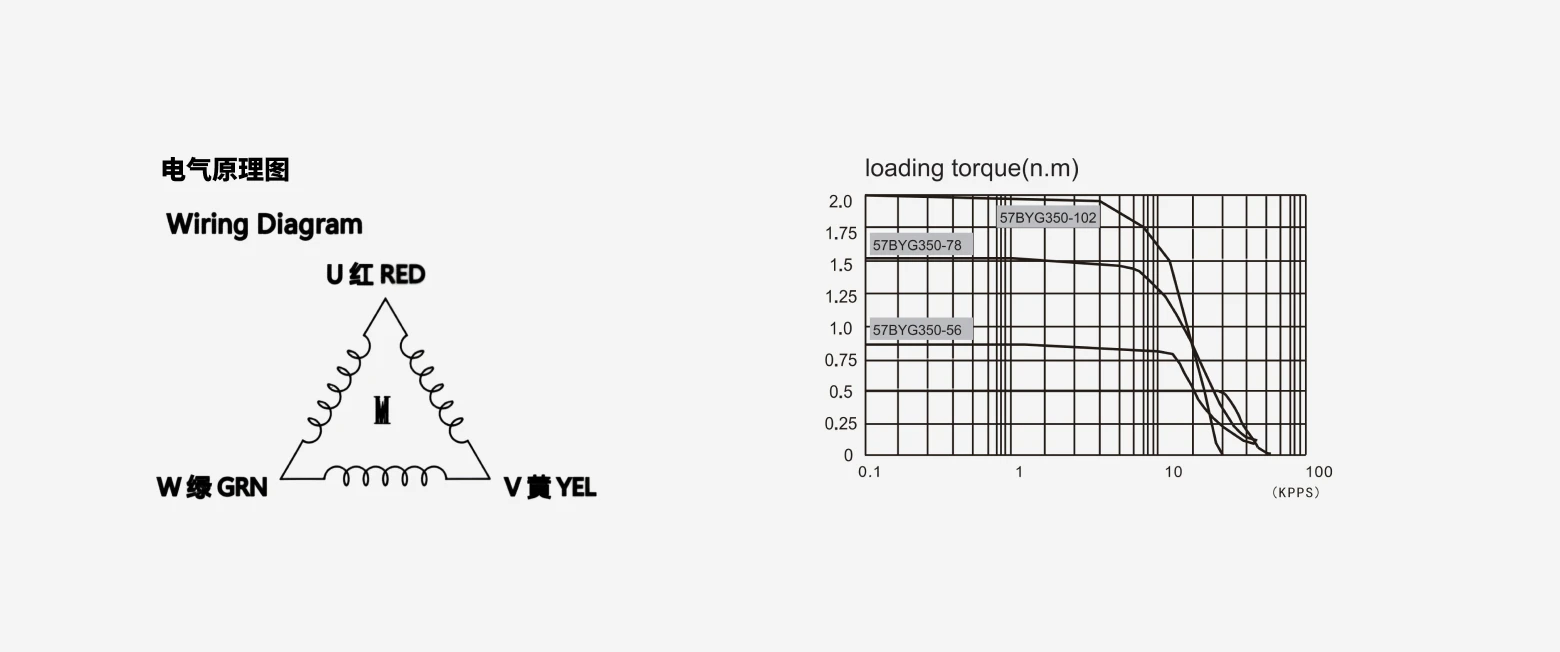
| Drive | 3-phase driver (3 half-bridges) |
| Lead Wires | 3-wire
|
Why Choose 3-Phase
A 3-phase hybrid stepper improves on a 2-phase one in a few specific ways. The benefit is motion quality, not raw torque:
- Lower vibration — three phases give a smoother rotating field, so torque ripple is smaller.
- Less resonance — the mid-speed resonance that can stall a 2-phase motor is much weaker.
- Better high-speed torque — the motor holds usable torque to higher speeds.
- Smoother low-speed running — useful where surface finish or quiet operation matters.
The trade-off is the driver: a 3-phase motor needs a dedicated 3-phase stepper driver, which is less common and costs more than a 2-phase one.
Typical Applications
The 3-phase NEMA 23 suits machines where motion quality matters:
- CNC routers and engravers — where vibration shows up in surface finish.
- Laser cutting and marking — smooth, fast gantry motion.
- High-speed automation — fast indexing and positioning with less resonance.
- Textile and printing — steady motion at speed.
- Quiet equipment — where 2-phase vibration is too noisy.
With a gearbox the same frame drives a low-speed, high-torque axis; a dual-shaft version adds a rear shaft for an encoder.
3-Phase vs 2-Phase NEMA 23: Which One Do You Need?
Both are 57mm frames. The choice is about motion quality versus cost:
| 3-Phase NEMA 23 | 2-Phase NEMA 23 |
|---|
| Step Angle | 1.2° | 1.8° |
| Vibration | Lower | Moderate |
| High-speed torque | Better | Good |
| Driver | 3-phase (less common) | 2-phase (common, cheaper) |
| Cost | Higher | Lower |
Pick 3-phase when smooth, low-vibration, high-speed motion matters. Pick the 2-phase NEMA 23 stepper motor when cost and driver availability lead. Both are 57mm, so they share mounting.
Customization Options
Cymotorix 3-phase NEMA 23 stepper motors can be customized for OEM integration. As a 3-phase NEMA 23 stepper motor manufacturer and supplier, we produce them to your specification. Common modifications include:
- Shaft diameter and length adjustment (standard shaft is 6.35mm / 1/4")
- D-cut or flat shaft for direct coupling
- Dual-shaft output for a rear encoder or second load
- Custom lead wire length and connector type (JST, Molex, bare leads)
- Winding parameters modified to match your driver voltage and current
- Rear-shaft extension for encoder mounting
- Planetary or worm gearbox integration for higher output torque at low speed
How to Drive a 3-Phase NEMA 23 Stepper Motor
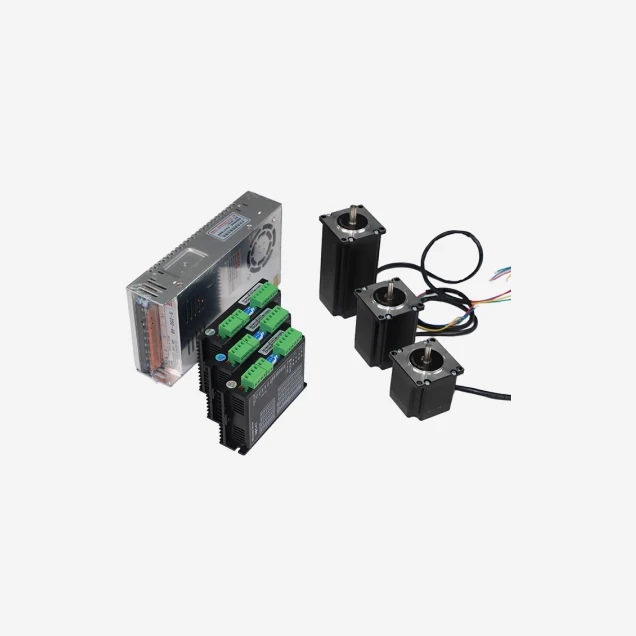
A 3-phase NEMA 23 runs only on a 3-phase stepper driver, which switches the three windings in sequence through three half-bridges. It will not run on a standard 2-phase driver. Rated current is around 3.0 to 5.0 A per phase, so the driver must be sized accordingly. We supply a matched 3-phase driver set up for the motor if you want the pair tested together.
Recommended supply voltage is 24–48VDC. A higher bus voltage holds torque at speed, which is part of why the 3-phase motor performs well at higher RPM. Set the driver's current limit to the motor's rated current so the windings don't overheat.