Motor Accessories: Gearboxes, Encoders, and Brakes Explained
A working reference for engineers and procurement teams adding a gearbox, encoder, or brake to a stepper or servo motor. It covers what each accessory does, how to match it to the motor, and when you actually need one.
Planetary Gearbox: Trading Speed for Torque
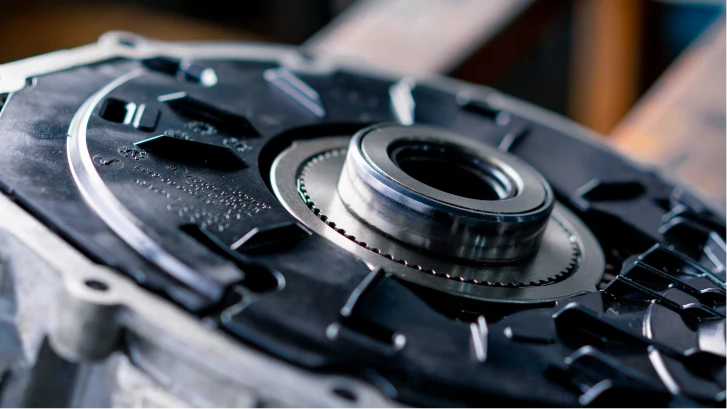
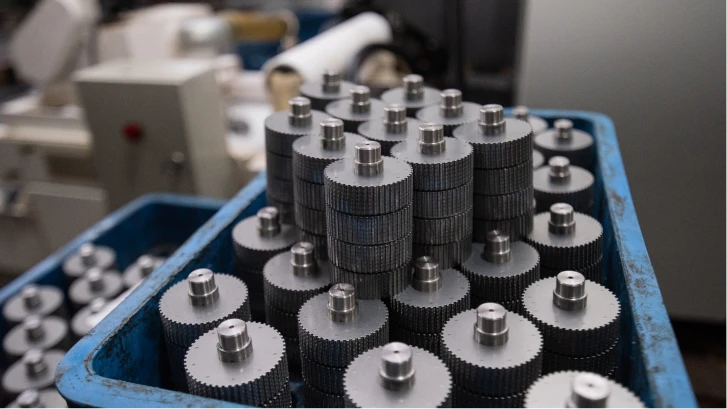
A planetary gearbox is the accessory that changes a motor's output the most. Mounted on the motor shaft, it multiplies torque by the reduction ratio and divides speed by the same number — a 10:1 gearbox gives roughly ten times the torque at one-tenth the speed. It also improves positioning resolution, since one output degree now takes several motor revolutions. Our gearboxes run ratios from 3:1 to 216:1 in one-, two-, and three-stage builds, with rated torque from 6 N·m on the smallest frame to 360 N·m on the largest, backlash from ≤15 arcmin, and IP65 sealing. Use one when the motor alone can't deliver the torque, when the load needs to run slower than the motor's efficient speed, or when you want finer positioning. The full model-by-model range is on the planetary gearbox page.
Encoder: Adding Feedback
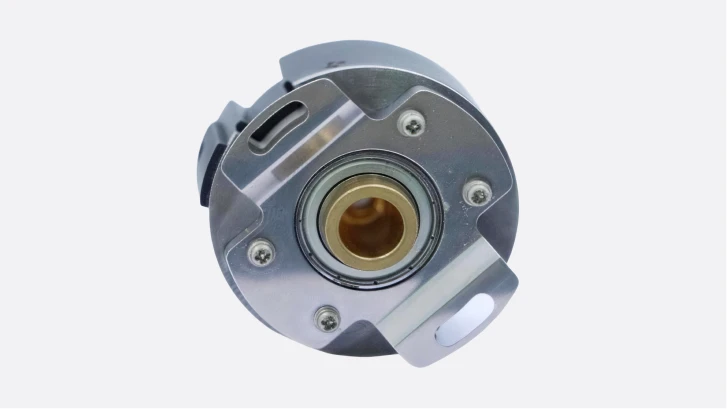
An encoder turns an open-loop motor into a closed-loop one by reporting rotor position and speed back to the drive. That's what lets a closed loop stepper correct lost steps and what makes a servo a servo. The choice is between two types:
- Incremental (2500-line): counts movement from a reference, so the system homes on power-up. Lower cost, fine for most positioning.
- Absolute (17-bit): reports the exact angle at all times, including after a power cut. No homing needed — the right choice for machines that can't run a homing routine on restart.
Resolution should be matched to the positioning accuracy the application needs, not pushed higher than necessary.
Electromagnetic Brake: Holding on Power Loss
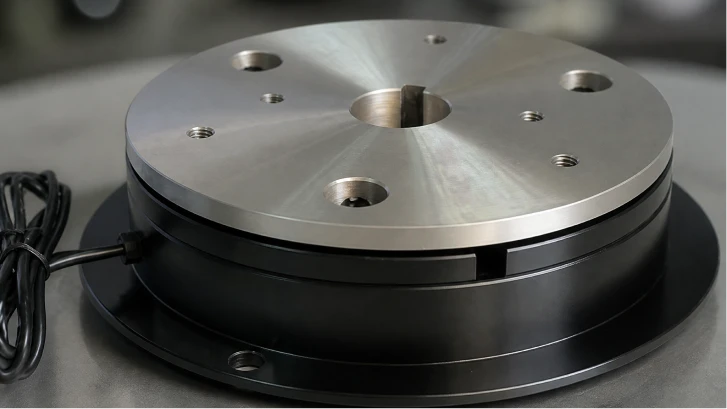
An electromagnetic holding brake keeps the shaft locked when power is off. Ours are power-off (spring-applied) type: the brake clamps when de-energized and releases when powered. That fail-safe behaviour is what a vertical axis needs — if power drops or the machine hits e-stop, a hanging load stays put instead of falling. A brake is worth fitting on lifts, vertical Z-axes, and hanging arms; on a horizontal axis with no back-drive risk it's usually unnecessary. We fit the brake between the motor body and the rear encoder, so it doesn't change the mounting.
How to Choose and Combine Accessories
Most decisions come down to the load and the axis:
- Not enough torque, or load too fast for the motor: add a planetary gearbox and pick the ratio for the torque and speed you need.
- Lost steps or no position confirmation: add an encoder — incremental for most jobs, absolute when homing isn't acceptable.
- Vertical axis or hanging load: add a power-off brake so the load holds on power loss.
These combine — a vertical CNC axis might use a motor with a gearbox for torque, an encoder for feedback, and a brake for hold, all on one frame. We assemble and test the full stack before shipping. Send us the motor model or the application and our engineers confirm the right accessories and whether to ship them loose or pre-assembled.