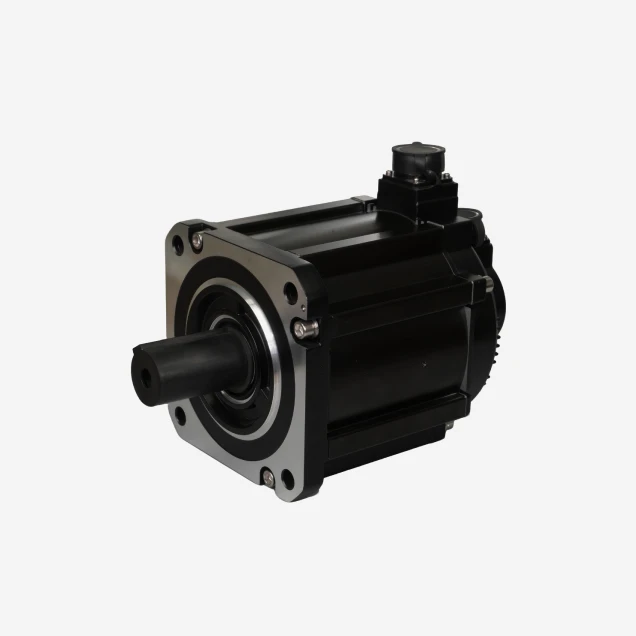
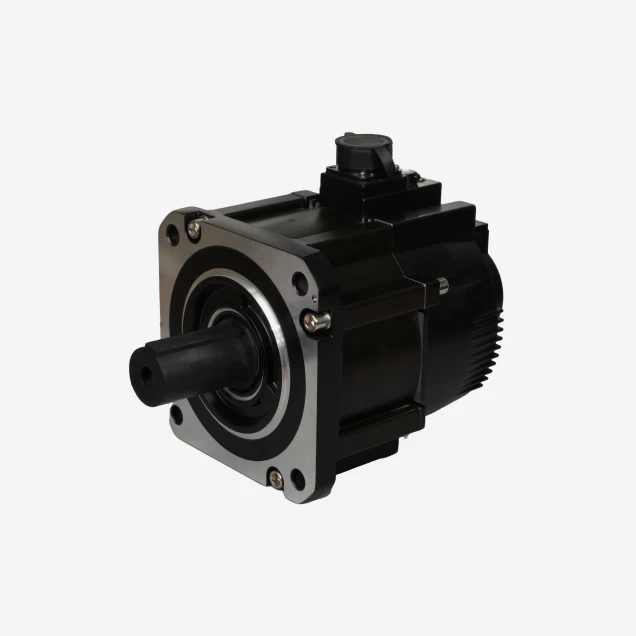
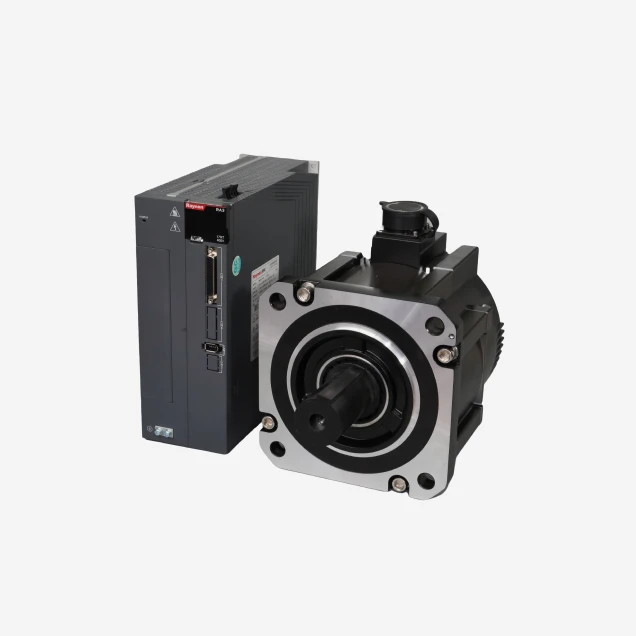
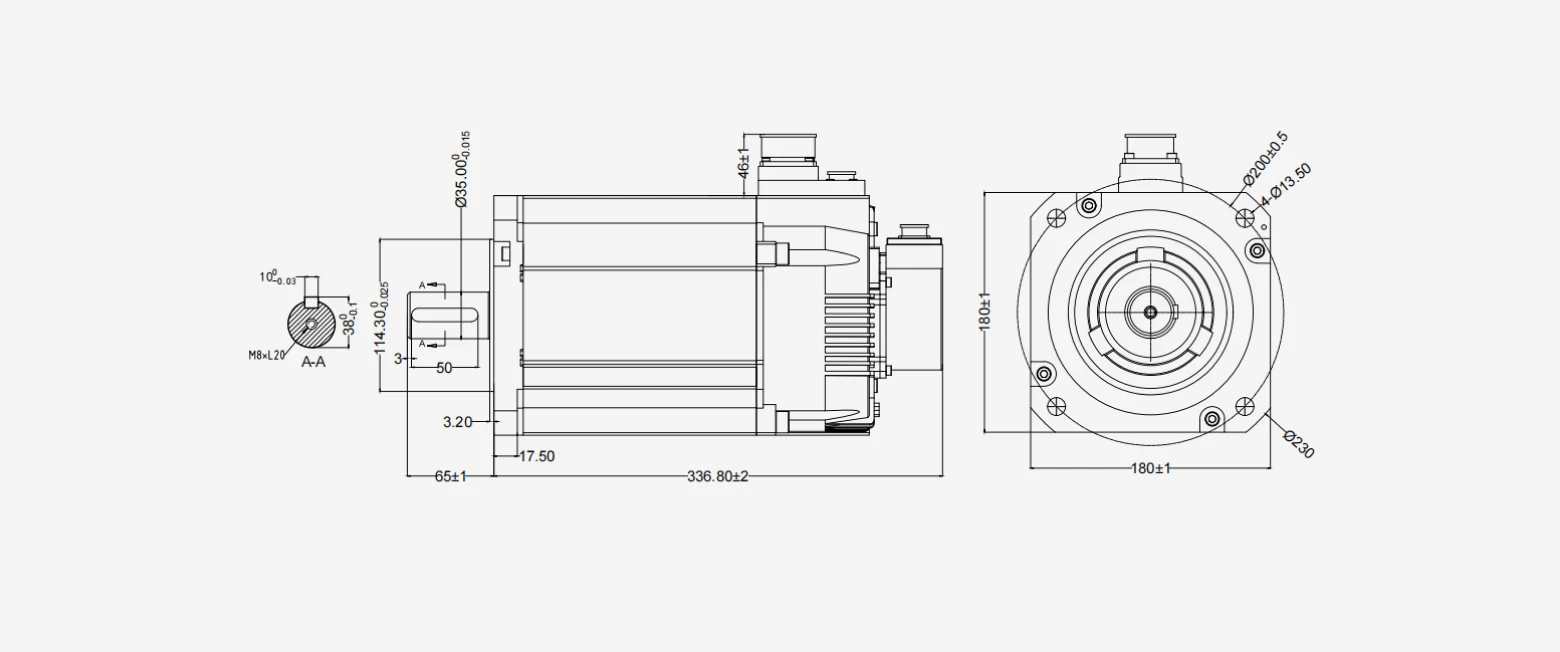
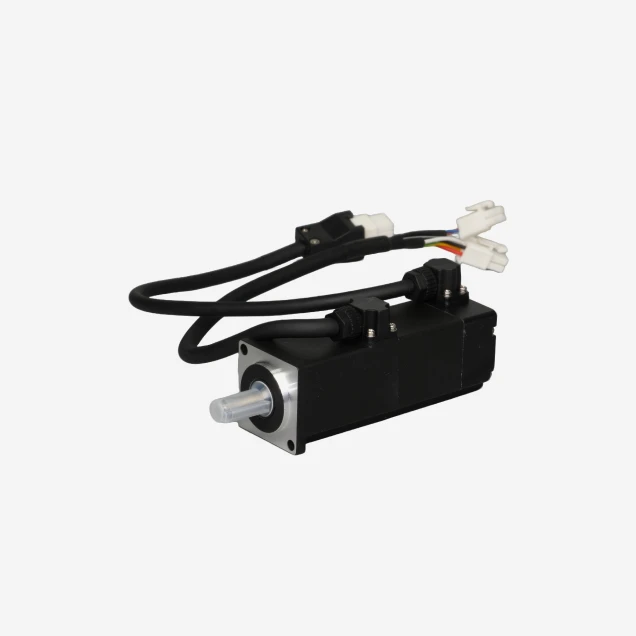
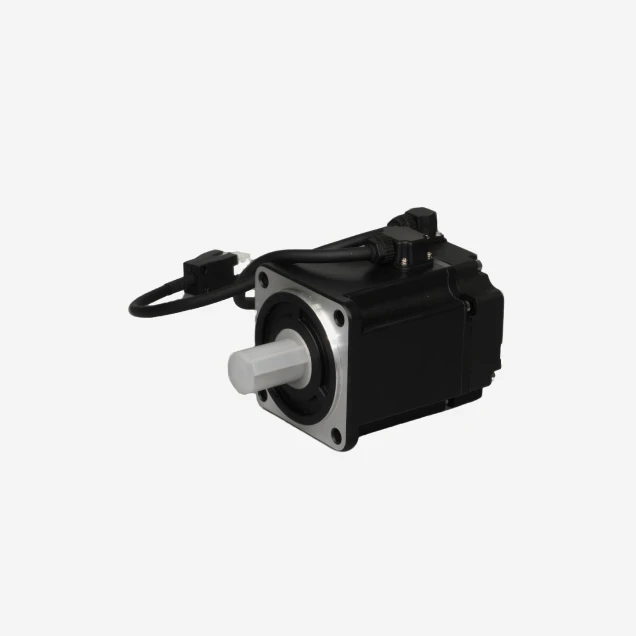
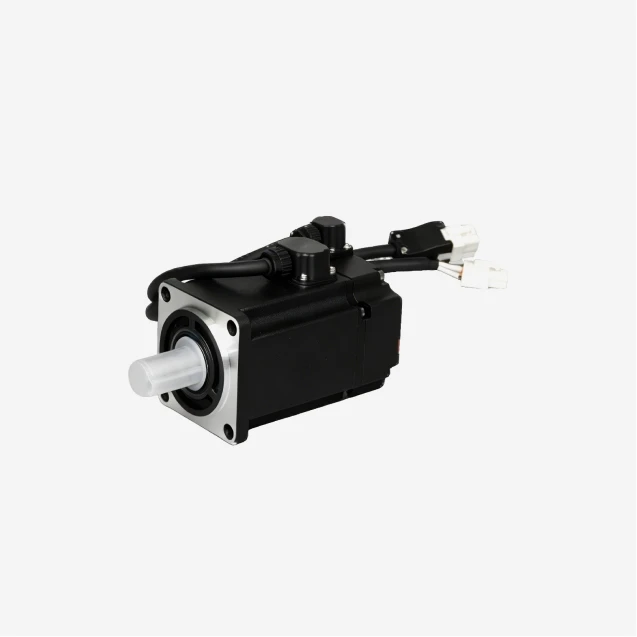
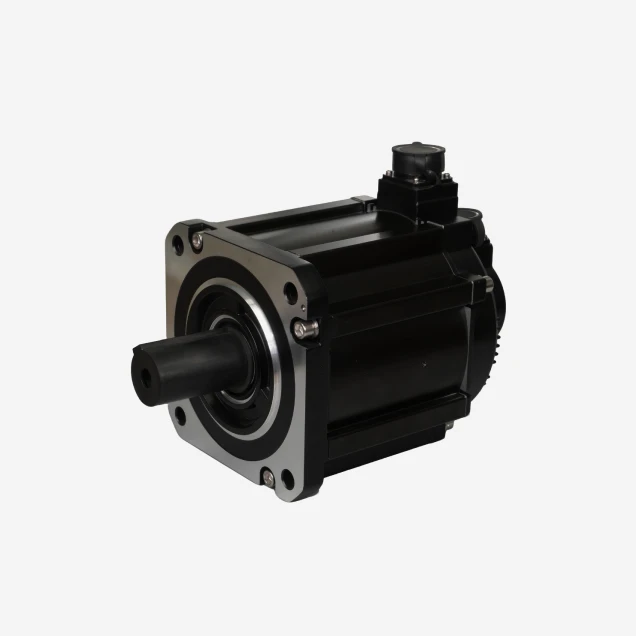
180mm High-Torque AC Servo Motor: up to 7.5 kW
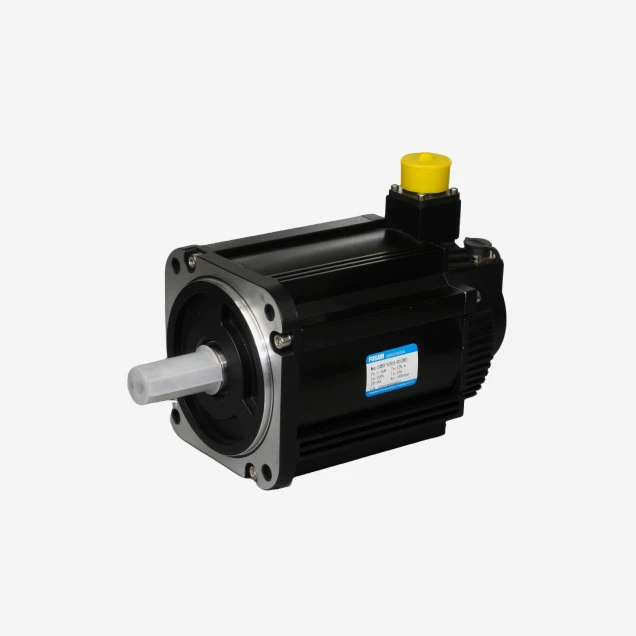
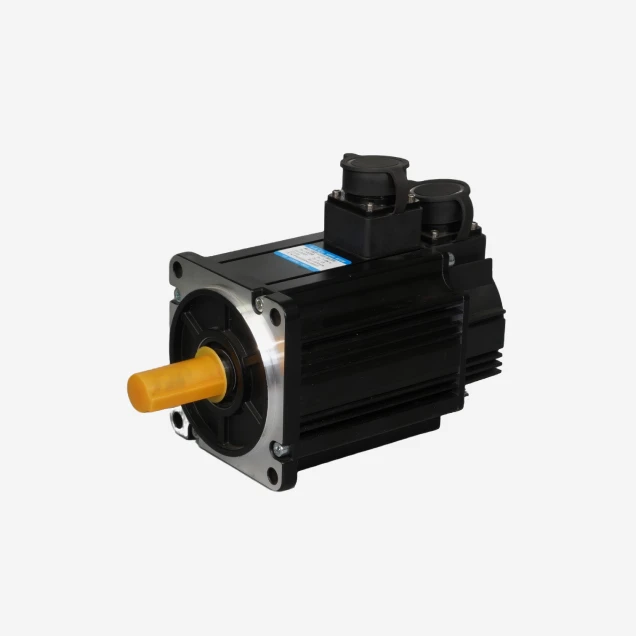
The 180mm servo motor is the largest, highest-torque frame in our servo range — a high-inertia permanent-magnet AC servo on a 180 mm flange, running on 380V three-phase. It delivers 2.9 to 7.5 kW with 18.5 to 47.7 N·m of rated torque at 1500 rpm, and runs closed-loop on a 17-bit absolute encoder. With this much torque and a large rotor inertia, it drives heavy, high-inertia loads directly, which puts it on the biggest machine-tool axes, presses, rotary tables and heavy automation where a smaller frame runs out of torque.
How Much Torque the 180 Delivers
The four models cover 18.5, 28, 35 and 47.7 N·m of rated torque, with extra peak torque for acceleration. That is enough continuous torque to move large inertial loads and hold position under heavy cutting or forming force. The motor also carries a large rotor inertia, so it matches big loads directly and keeps the axis stable, where a low-inertia servo would oscillate. For axes that need less than this, the 130mm servo motor covers the step below.
Direct Drive or a Smaller Servo with a Gearbox
High torque can come two ways: a large servo that makes the torque on its own, or a smaller servo with a gearbox that multiplies it. The 180 is the direct-drive answer. Driving the load straight from the motor removes the gear backlash and compliance that hurt accuracy and stiffness, and there is no gear stage to service. A gearbox still wins when space or cost rules out a motor this size, at the cost of backlash and maintenance.
| Direct Drive (180) | Smaller Servo + Gearbox |
|---|
| Backlash | None — motor drives the load directly | Gear backlash adds lost motion |
| Stiffness | High, no gear compliance | Lower, gear train flexes |
| Parts and maintenance | Fewer parts, less to service | Extra gear stage to maintain |
| Torque source | From the motor itself | Multiplied from a smaller motor |
| Best when | You can size a servo with the torque | Space or cost rules out a big motor |
If you can size a servo with the torque the axis needs, direct drive with the 180 gives the cleanest, stiffest motion. If the load is extreme or space is tight, a smaller servo with a gearbox is the practical route.
Typical Applications
The 180mm servo suits the heaviest, highest-torque axes:
- Large machining centres and heavy CNC feed axes — torque under hard cutting load.
- Servo presses, stamping and forming — high force with controlled position.
- Big rotary tables, trunnions and index drives — large inertial loads held in range.
- Heavy gantry, beam and overhead axes — large mass moved with control.
- Wide web, converting and printing lines — steady torque on large roll drives.
- Winders, extruders and heavy material handling — high continuous torque.
Supply, Drive and Customization
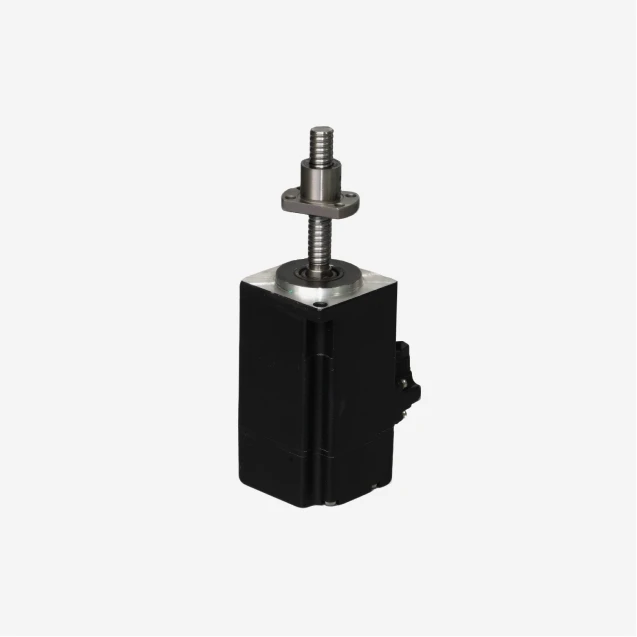
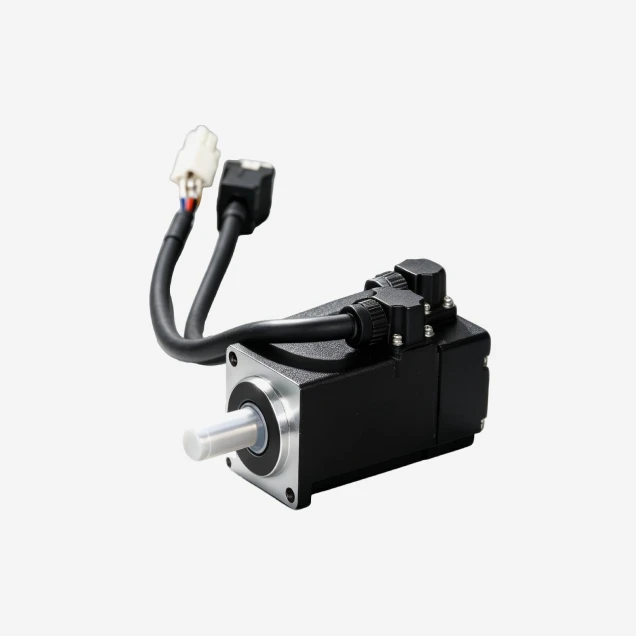
The 180 runs on a 380V three-phase supply, which is what high-power machines and factory mains already provide. Every motor is matched to a servo drive sized for the power and tuned to the motor as a tested set, running position, speed and torque modes with pulse and direction or bus communication. For machine-tool feed it can carry a ball screw output for direct linear motion. Build options cover shaft, keyway and flange to your drawing, a power-off brake for vertical axes, a gearbox, and the connector and cable you need. As a servo motor manufacturer, we test the motor and drive together before they ship.