
The Engineering Shift Toward Low-Voltage Motion Architecture
Traditional industrial automation relies heavily on high-voltage AC servo systems operating on 220VAC or 380VAC mains power. While these platforms deliver exceptional power density for heavy machine tools, a growing segment of modern engineering applications demands a safer, more compact, and highly mobile actuation solution. Battery-powered automated guided vehicles (AGVs), mobile medical carts, collaborative robots (cobots), and compact semiconductor handling equipment operate within tight spatial and electrical safety constraints.
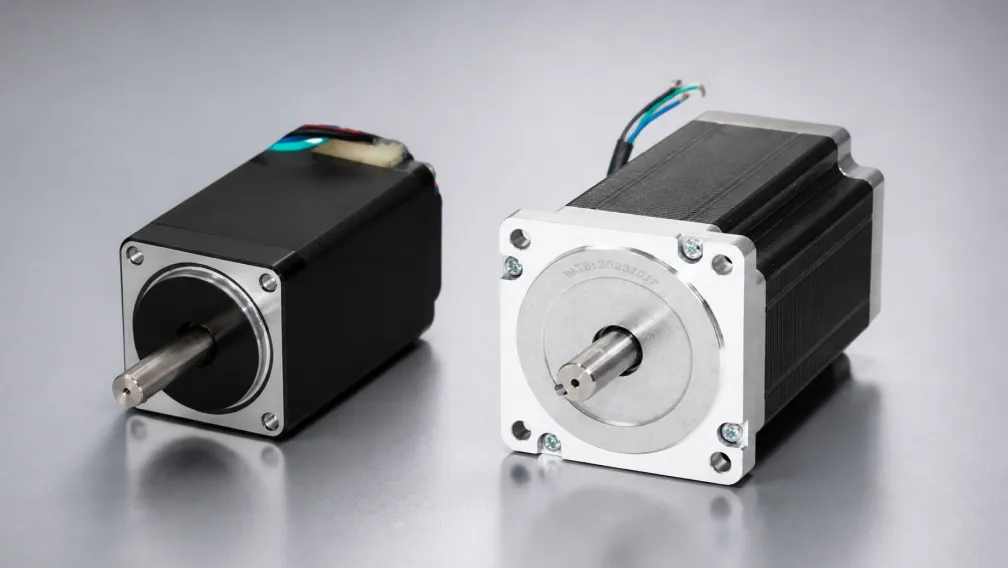
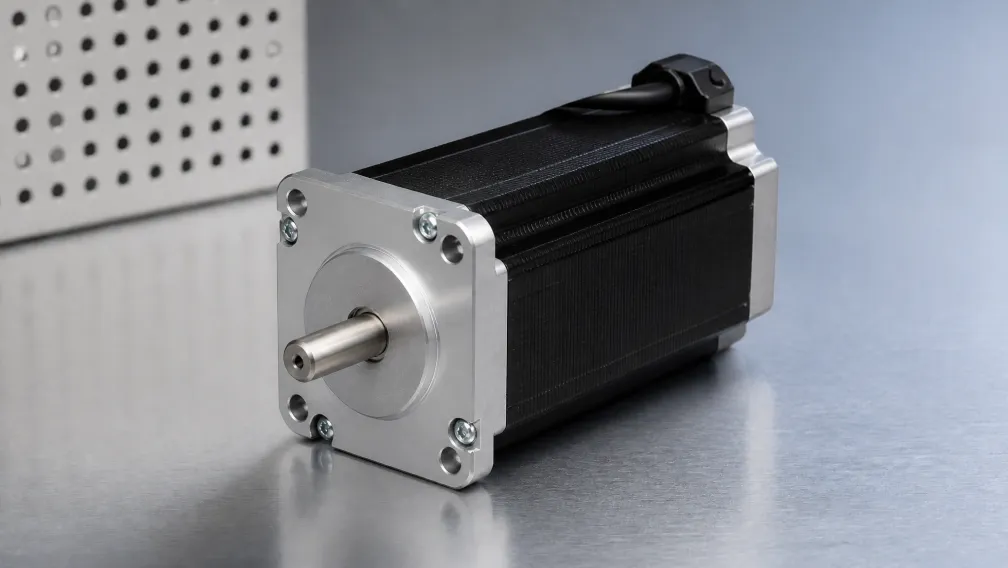
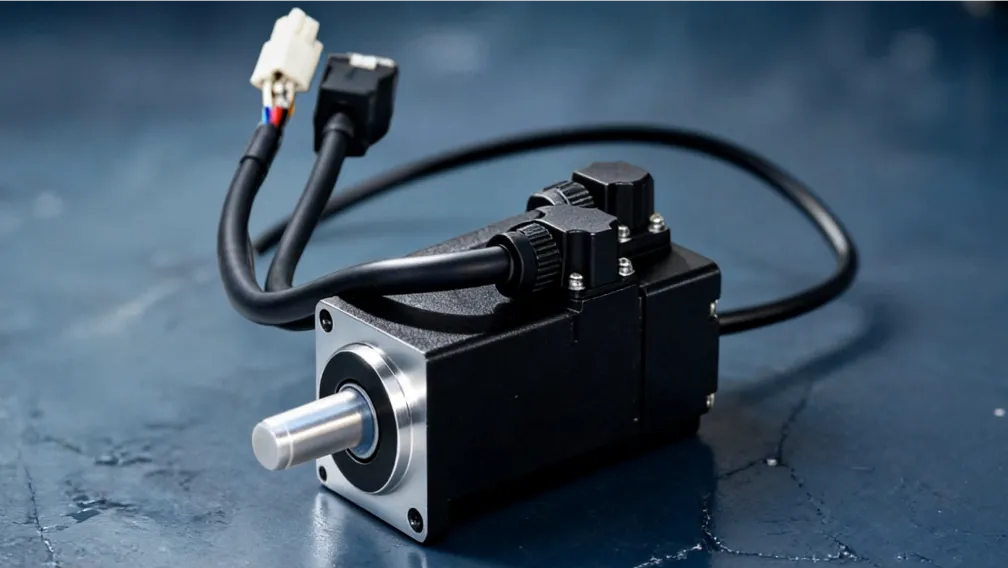
Low-voltage servo motors—typically operating on DC bus voltages between 24VDC and 48VDC—bridge the performance gap between traditional stepper systems and heavy industrial AC servos. They combine the precise closed-loop feedback and high dynamic bandwidth of a servo drive with the electrical safety and compact integration required in mobile or low-clearance machinery. This technical guide examines the internal architecture, torque performance, and application parameters of low-voltage servo platforms.
1. Internal Architecture: Permanent Magnets and Low-Inertia Rotors
A low-voltage servo motor is a brushless permanent magnet synchronous motor (PMSM) engineered specifically to operate efficiently under restricted DC bus voltages. The internal rotor consists of high-energy rare-earth permanent magnets (typically neodymium-iron-boron) arranged to maximize magnetic flux density. Because the available bus voltage (24V to 48V) is significantly lower than a rectified 220VAC mains supply (which yields approximately 310VDC), the motor windings must be configured with fewer turns of heavier gauge wire to maintain the correct electrical time constant (L/R ratio).
This low-inductance winding design allows the low-voltage low voltage servo motor to build current rapidly when commanded by the drive. Furthermore, the compact rotor geometry results in extremely low rotor inertia. A lower inertia ratio allows the motor to achieve exceptional angular acceleration rates, making it ideal for high-frequency start-stop cycles, rapid directional changes, and precise index positioning in automated logistics equipment.
2. Performance Comparison: Low-Voltage Servo vs. Traditional Stepper Systems
Engineers designing compact machinery frequently evaluate low-voltage servos against open-loop or closed-loop stepper motors. While both options can operate on 24V or 48V power supplies, their dynamic torque behaviors are fundamentally distinct:
| Performance Parameter | Low-Voltage AC Servo System | High-Performance Stepper System |
| Operating Voltage Range | 24VDC to 48VDC (Safe Extra Low Voltage) | 24VDC to 80VDC (Chopper regulated) |
| High-Speed Torque Retention | Maintains flat torque curve up to 3,000+ RPM | Torque decays exponentially past 600 RPM |
| Feedback Architecture | Nested 3-loop PID with high-res encoder | Open-loop or simple step-tracking feedback |
| Acoustic Profile at Speed | Whisper-quiet continuous sinusoidal commutation | Subject to mid-band resonance and magnetic whine |
| Peak Overload Capacity | 300% of rated torque for dynamic acceleration | Limited to 100% holding/running torque limit |
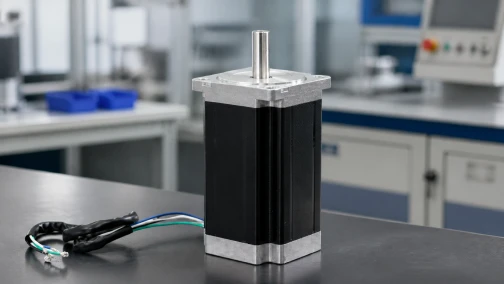
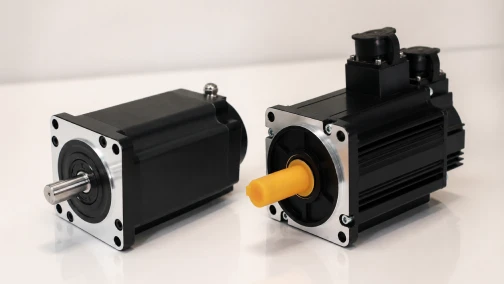
While a stepper motor provides rigid holding torque at a lower baseline cost, its torque output collapses as rotational velocity increases due to inductive reactance. A low-voltage servo utilizes continuous sinusoidal commutation managed by an advanced motor driver, allowing it to maintain stable torque delivery across a wide speed window up to 3,000 RPM or higher.
3. Safety Compliance and SELV (Safety Extra Low Voltage) Benefits
A primary driver for specifying low-voltage motion hardware is compliance with electrical safety regulations. Industrial machinery operating at 220VAC or higher requires rigorous enclosure shielding, heavy-duty conduit routing, and strict lockout/tagout (LOTO) protocols to protect maintenance personnel from hazardous electrical shock.
Low-voltage DC systems operating at or below 48V fall strictly under Safety Extra Low Voltage (SELV) guidelines. This classification eliminates the lethal risk of electric shock during field maintenance, manual loading, or collaborative human-robot interaction. For automated guided vehicles (AGVs) operating in open warehouse environments or medical diagnostic tools where operators interact directly with the mechanism, SELV compliance drastically reduces the complexity and cost of physical safety interlocks and protective guarding.
4. Integration with Battery-Powered Mobile Robotics (AGVs and AMRs)
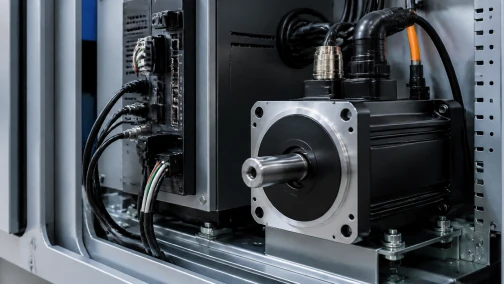
Autonomous mobile robots and battery-powered AGVs represent the fastest-growing deployment sector for low-voltage actuation. These machines run on standard 24V or 48V lithium battery banks. Utilizing a high-voltage AC servo would require adding heavy, expensive DC-to-AC inverters, which increases energy consumption, adds dead weight, and reduces overall operating run-time.
Low-voltage servo drives connect directly to the mobile platform's DC bus. They draw power efficiently based on the actual load demand, minimizing idle losses. Furthermore, when an AGV decelerates or navigates down a slight incline, the low-voltage servo motors operate in generator mode, returning regenerative braking energy directly back into the onboard battery pack. This regenerative braking loop extends the operational cycle between mandatory battery charging intervals.

5. Solving Space Constraints in Collaborative Robotics and Medical Devices
In medical laboratory automation, compact centrifuges, and collaborative robotic arms, mounting space is severely restricted. Traditional high-voltage AC servos require bulky cables with thick insulation layers and rigid routing radiuses, which restrict the movement of articulated robot joints.
Low-voltage servo systems utilize compact, flexible cabling that can pass easily through hollow robot wrist joints and tight cable chains. Because the operating voltage is low, the physical clearance requirements (creepage and clearance distances) inside connectors and terminal blocks are significantly reduced. This allows machine builders to shrink the overall footprint of the electromechanical assembly without sacrificing positioning precision or dynamic response.
6. Engineering Selection Criteria for Low-Voltage Motion Axes
Question: How do automation engineers determine whether a low-voltage DC servo is suitable for an axis compared to a standard high-voltage AC servo?
Answer: Engineers evaluate three primary operational constraints: First, if the machine is battery-powered or mobile (such as an AGV), a 24V/48V low-voltage servo is mandatory to eliminate the need for heavy inverters. Second, if human-machine collaboration requires SELV electrical safety compliance, low-voltage systems prevent hazardous shock risks. Third, if the continuous power requirement remains below 2.0 kW and space is restricted, low-voltage servos deliver the required dynamic bandwidth and acceleration without the bulk of high-voltage mains wiring.
7. Upgrading from Open-Loop Axes to Precision Low-Voltage Servos
Machines that currently rely on open-loop step actuation often experience positioning drift or stall failures when payload masses fluctuate unexpectedly. Upgrading to a closed-loop architecture does not always require jumping to heavy mains-powered hardware. Integrating a low-voltage servo platform provides the exact dimensional drop-in replacement flexibility needed for modernization, while adding absolute encoder feedback and advanced PID loop tuning. For applications requiring simpler drop-in reliability with high holding torque, our closed-loop stepper motor line offers an alternative intermediate upgrade path.
Engineering Support and Custom Motion Solutions
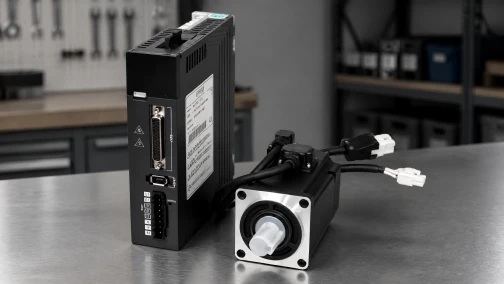
Specifying the correct low-voltage actuation ecosystem requires balancing battery bus voltage limits, continuous current ratings, and dynamic acceleration profiles. Cymotorix engineers a comprehensive portfolio of low-voltage servo motors, matched drives, and motion control accessories. Our technical team provides complete 3D CAD models, wiring schematics, and sizing calculations through our download center. Contact our engineering department to review your voltage parameters and customize an actuation platform for your mobile or compact machinery.
Frequently Asked Questions (FAQ)
Question: What is the primary operational advantage of a low-voltage servo motor over a standard high-voltage AC servo?
Answer: Low-voltage servo motors operate safely on DC bus voltages between 24VDC and 48VDC (SELV classification), eliminating the hazard of lethal electric shock. This makes them ideal for battery-powered mobile robots, medical devices, and collaborative applications where heavy mains-powered cabling and complex safety enclosures are impractical.
Question: Can a low-voltage servo motor match the speed and torque performance of a mains-powered servo?
Answer: For power requirements under 2.0 kW, low-voltage servos deliver comparable dynamic acceleration, flat torque curves up to 3,000 RPM, and 300% peak overload capacity. However, for extremely heavy industrial machine tools requiring tens of kilowatts of continuous power, high-voltage AC mains systems remain necessary due to current limitations at low voltages.
Question: How do low-voltage servo systems improve battery run-time in mobile robots (AGVs)?
Answer: Low-voltage servos connect directly to the robot's onboard battery pack without requiring inefficient DC-to-AC inverters. Additionally, during deceleration and braking, the motor acts as a generator, capturing kinetic energy and feeding it back into the battery through regenerative braking, which extends operational run-time.
Question: Why do low-voltage servo motors use specialized low-inductance windings?
Answer: Because the available bus voltage (24V to 48V) is much lower than a 220VAC rectified mains supply, low-inductance windings with fewer turns of heavier wire are required. This allows the drive to push current through the coils rapidly, ensuring high dynamic response and rapid acceleration despite the lower supply voltage.
Question: Are low-voltage servo motors difficult to tune compared to standard industrial servos?
Answer: No. Modern digital low-voltage servo drives feature advanced auto-tuning software. By executing brief automated movement routines, the drive measures the mechanical load inertia and automatically configures the internal PID loop parameters to optimize axis stability and minimize settling time.
Question: Can I use a standard stepper motor driver to power a low-voltage servo motor?
Answer: No. A stepper motor driver applies open-loop pulse trains without rotor feedback. A low-voltage servo motor is a brushless permanent magnet AC motor that requires continuous closed-loop sinusoidal commutation, real-time encoder feedback, and a matched servo drive executing nested PID control loops to operate correctly.
-

Cymotorix
Stepper Motor & Servo Motor Manufacture
Cymotorix is a China-based motor manufacturer with 20+ years of experience producing hybrid stepper motors, AC servo motors, and matched drivers for OEM customers worldwide.