
Stepper Motor vs Servo Motor: How to Choose the Right One for Your Application
A practical selection guide for engineers and OEM buyers, from the Cymotorix motion control team.
Every automation project runs into the same question at some point: stepper or servo? Both motors position accurately, both are widely used in industrial equipment, and both can look right on paper for the same machine. The wrong choice usually shows up later — either as a machine that stalls under load, or as a bill of materials that costs three times more than it needs to.
This guide covers the technical differences that actually matter for selection, when each motor is the better call, and a checklist we walk our OEM customers through before quoting a project. It draws on what we see day-to-day supplying steppers, servos, and drives to machine builders across CNC, 3D printing, medical, packaging, and factory automation.
Quick Answer: Stepper or Servo?
Use a stepper motor when your load is predictable, your top speed stays under about 1,000 RPM, and you need to hold position without a fight — think 3D printers, small CNC axes, lab dosing pumps, textile machines, camera sliders. Use a servo motor when speeds go above 1,500 RPM, loads vary during the cycle, acceleration is aggressive, or the application has to correct itself in real time — pick-and-place, high-speed packaging, robotic joints, machine tools cutting metal.
Budget usually pushes engineers toward steppers first. That's often right for under 500 W applications. But when downtime or scrap cost is high, the servo pays for itself quickly through faster cycles and closed-loop reliability.
How Each Motor Actually Works
To make an informed choice, it is essential to understand the fundamental mechanics behind both technologies. While both are designed to convert electrical pulses into precise mechanical movement, their internal architectures and control philosophies are entirely different.
Stepper motor operating principle
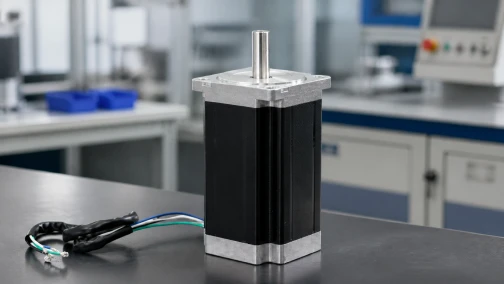
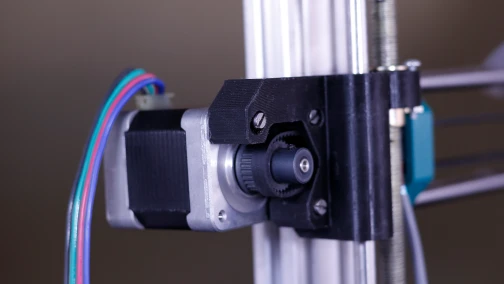
A stepper is a brushless DC motor with a high pole count. The driver energises phases in sequence, and the rotor snaps into alignment with each new field position. A standard 2-phase hybrid stepper divides one revolution into 200 mechanical steps (1.8° each). Microstepping in the driver can push resolution to 25,000 steps per revolution or more, though the extra resolution is electrical smoothing — mechanical accuracy still comes from the rotor tooth geometry. See our 2-phase stepper motor and 3-phase stepper motor lines for the two main phase configurations.
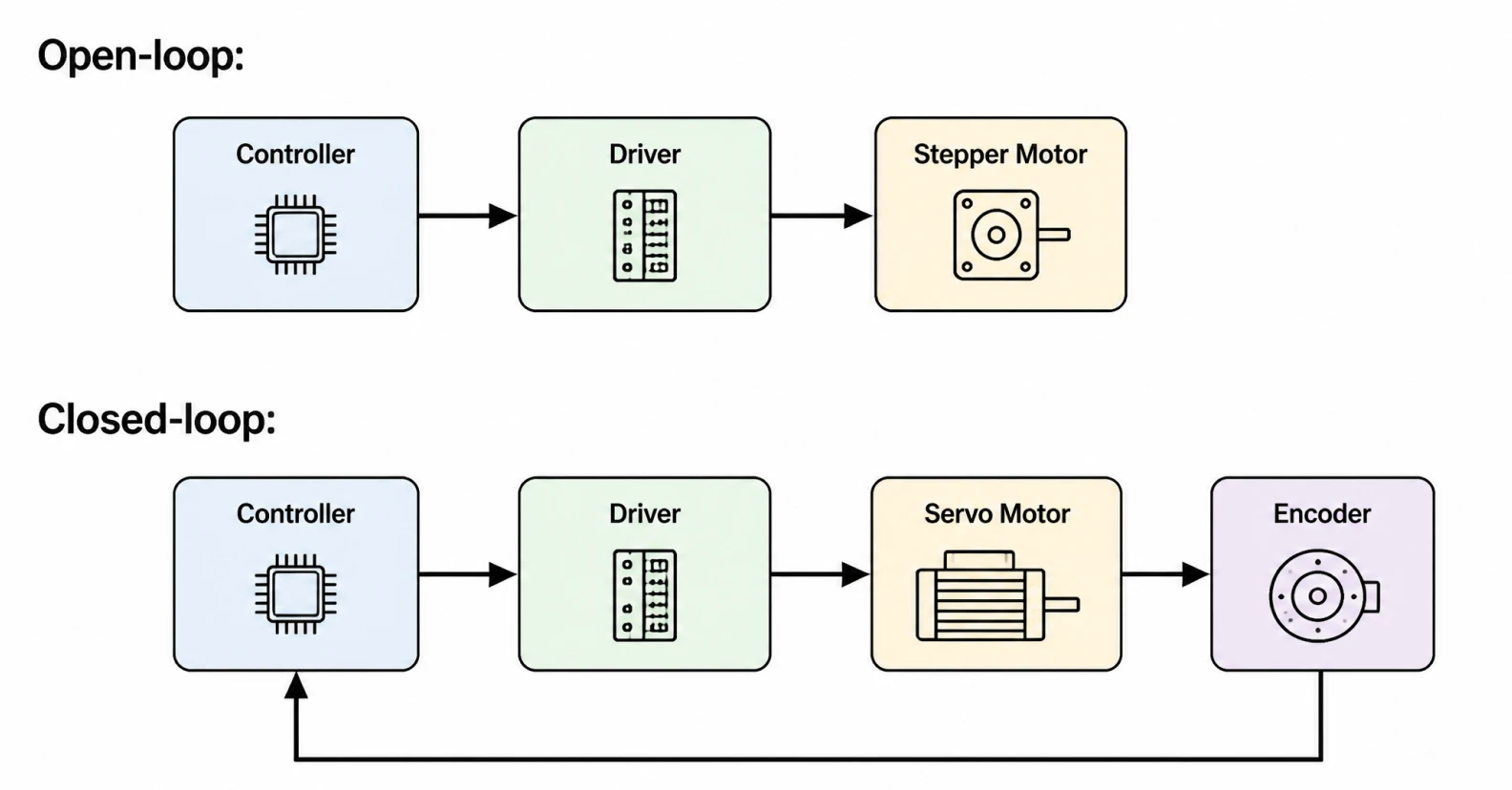
Because the motor moves in fixed increments and the driver just counts pulses, there is no need for feedback in most cases. That keeps the system simple and cheap. The trade-off: if the load exceeds the motor's dynamic torque, the rotor lags behind the field and skips a step. The controller has no way of knowing this happened.
Servo motor operating principle
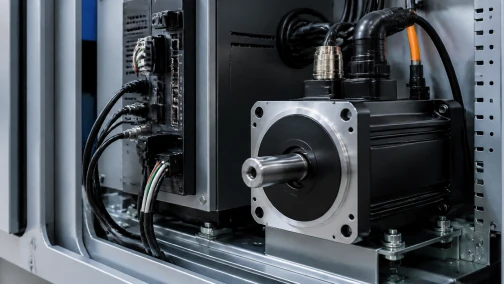
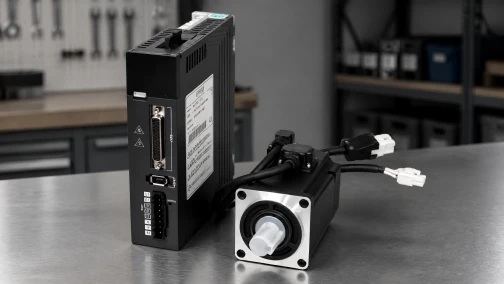
A servo is usually a low-pole-count permanent-magnet synchronous motor with a high-resolution encoder mounted on the shaft. The drive continuously reads actual position and speed from the encoder, compares them to the command from the PLC or motion controller, and adjusts current in real time through a PID loop. The system knows where the shaft is at every instant, and corrects itself if the load pushes back.
Fewer poles and a smoother magnetic geometry mean the servo produces flatter torque across a much wider speed range. Rare-earth magnets give higher torque density in a compact frame. The cost of all this: encoder, tuning, more expensive drive electronics, and a longer commissioning process.
Stepper vs Servo Motor: Side-by-Side Comparison
The table below summarises the parameters that matter most in a selection discussion. Values reflect typical industrial hybrid steppers and AC brushless servos in the 40–1000 W range.
| Parameter | Stepper Motor | Servo Motor |
| Control loop | Open-loop (closed-loop optional) | Closed-loop with encoder feedback |
| Pole count | 50–100 (hybrid types) | 4–12 |
| Typical step / resolution | 1.8° or 0.9° per step, microstepping to 25,000+ steps/rev | Encoder-based, 2,500 to 20,000+ PPR |
| Peak / rated speed | Effective up to ~1,000–1,500 RPM | 3,000–6,000 RPM, some higher |
| Torque behavior | High holding torque, drops sharply above rated speed | Roughly flat torque across speed range, 3× peak overload |
| Load-to-rotor inertia ratio | ~10× (open-loop), ~30× (closed-loop) | ~100× |
| Positioning accuracy | ±0.005° (mechanical, from tooth geometry) | ±0.02° or better (encoder-dependent) |
| Power at standstill | Draws holding current, generates heat | Draws only what the load needs |
| System complexity | Driver + pulse source | Drive + encoder + tuning |
| Relative system cost | Baseline | Roughly 2×–10× a comparable stepper package |
| Best speed range | 0–1,000 RPM | 500–6,000+ RPM |
Where the Differences Really Matter
Comparing spec sheets only tells part of the story. In real-world industrial environments, the differences between steppers and servos dictate how a machine performs under stress, how much maintenance it requires, and how much it costs to operate. Below are the key performance areas where these two technologies diverge.
Torque and speed behavior
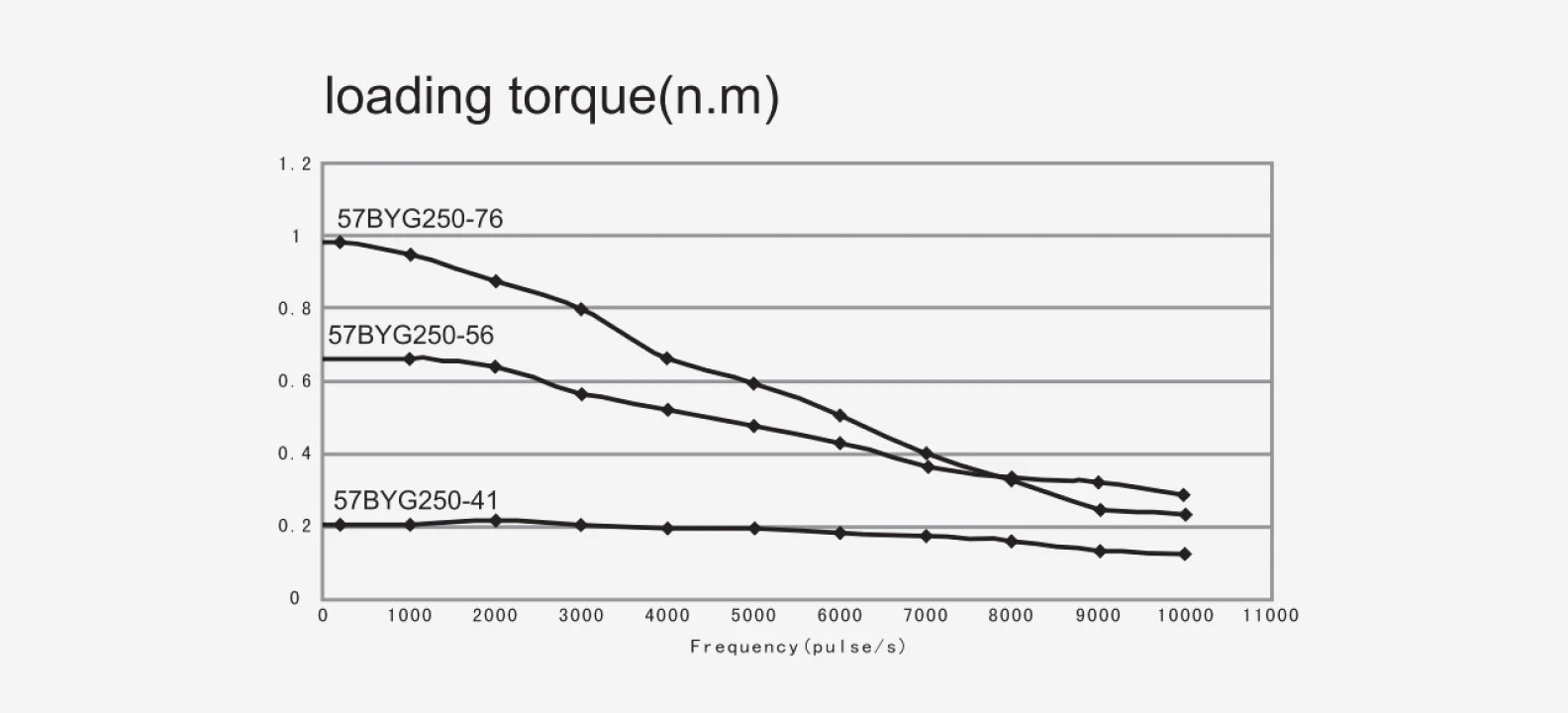
This is the single most important curve to look at. A stepper delivers peak torque at zero speed and holds it well up to a few hundred RPM. Past its rated speed, torque falls off a cliff — you can easily lose 70–80% of holding torque by 1,500 RPM. A comparable servo maintains roughly constant torque from zero up to rated speed, then drops into a constant-power region. It can also deliver about 3× rated torque for short bursts, which is what enables aggressive acceleration.
Practical takeaway: if the duty cycle spends most of its time between 0 and 800 RPM, a properly sized stepper is efficient and cheap. If the machine spends most of its time between 1,500 and 4,000 RPM, you are fighting physics with a stepper.
Positioning accuracy vs repeatability
These two get conflated all the time. Stepper accuracy is defined by rotor tooth geometry — typically ±0.05° absolute — and it is highly repeatable because the motor always lands on the same mechanical detent. Servo accuracy is defined by encoder resolution and tuning quality, and a well-tuned system reaches ±0.01° or tighter.
For point-to-point positioning where you return to the same location repeatedly, both technologies perform well. For contouring at speed, or for positioning under variable load, servo wins because the closed loop corrects error the moment it appears.
Open-loop control and how it fails under load
An open-loop stepper trusts that the load will not exceed the motor's torque budget. When it does, the motor loses steps silently, and the machine ends up in the wrong position. The controller has no idea. The fix is either to size the stepper with a large safety margin (2× is common), add an encoder to close the loop, or move to a servo.
Adding an encoder to a stepper is the middle path. A closed-loop stepper motor catches missed steps, corrects position, and keeps the high holding torque of a stepper. Load-to-rotor inertia ratio jumps from about 10× (open-loop) to 30×. It costs more than a plain stepper but less than a full servo package — a good compromise on many machines.
Cost, sizing, and total ownership
A stepper package (motor + driver) is typically 2× to 10× less expensive than a servo package of equivalent frame size, especially below 500 W. The cost gap comes from three places: the encoder, the more complex drive electronics, and rare-earth magnets in the servo rotor. That gap narrows as power ratings climb, and by the time you hit multi-kilowatt applications, the price difference is far less dramatic.
Total ownership tells a different story. A servo runs cooler, draws current only when it needs to, tends to last longer under continuous duty, and cuts cycle time. On a packaging line running two shifts a day, cycle-time savings dwarf the upfront cost within months. On a batch process that runs a few hours a week, they never do.
Heat, noise, and vibration
A stepper draws its rated current whenever the coils are energised, including at standstill. That translates to heat you need to manage in the enclosure. Steppers also generate mechanical vibration at each step — noticeable at low speeds and around specific resonance frequencies. Microstepping and mechanical damping fix most of this, but some applications (optical instruments, precision lab equipment) still choose servos for the smoother motion profile.
Servos run cooler, quieter, and smoother. In return, an under-tuned servo will hunt — oscillate slightly around the setpoint — which is annoying at best and destructive at worst. Tuning is a real skill, and one reason well-supported drives matter.
Which Applications Call for Which Motor
There is no universal best motor, only the best motor for a specific set of operational requirements. Matching the motor to the application's speed, load variability, and precision demands is the key to building cost-effective and reliable machinery.
When a stepper is the right call
Stepper motors are typically the optimal and most cost-effective choice for applications with the following characteristics:
• 3D printers and desktop CNC — predictable loads, low-to-moderate speeds, tight budgets
• Medical dosing pumps, lab automation, and analytical instruments — precise incremental moves, quiet duty cycles, position holding required
• Textile machines, engraving, and cutting plotters — repetitive point-to-point motion at moderate speed
• Small conveyors and indexers — high holding torque without brake
• Semiconductor handling, dispensing, and inspection stages — where quiet, low-vibration positioning matters
For most of these, our stepper motor range from NEMA 8 through NEMA 42 covers the typical sizing envelope.
When a servo is the right call
Servo motors are necessary when the application demands high dynamic performance, speed, and real-time error correction. They are the standard for:
• High-speed pick-and-place and packaging machinery — cycle time driven by acceleration
• Robotics and articulated arms — coordinated multi-axis motion, variable payload
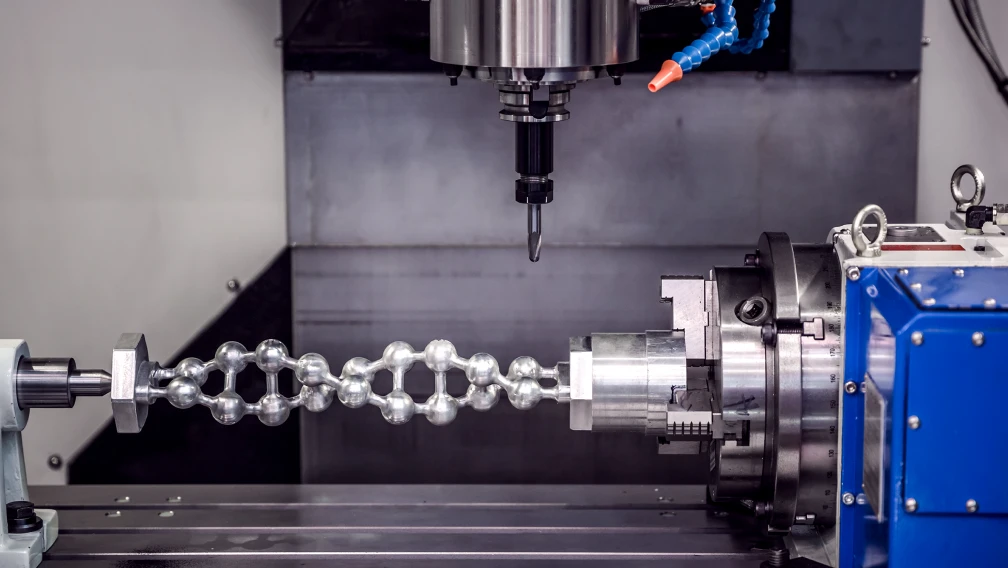
• Machine tools cutting metal — high dynamic loads, contouring accuracy at speed
• Web handling, printing, converting — continuous synchronous motion
• Any axis with safety implications or expensive workpieces — closed loop is not optional
Our servo motor range spans 40 mm compact frames up to 180 mm for high-power applications.
The hybrid option: closed-loop steppers
Between the two extremes sits the closed-loop stepper. It uses a stepper rotor and stator but adds an encoder and a smarter drive that behaves like a servo control loop at low speed. You get high holding torque, no lost steps, quieter operation, and lower cost than a servo. It fits applications where a plain stepper is being pushed to its limit but the budget or panel space does not justify a full servo. We covered this technology in depth in our closed-loop stepper motor guide and the related hybrid servo stepper article.
A Practical 5-Step Selection Checklist
Before quoting a motor, we walk customers through five questions. Answer these and the shortlist writes itself.
1. Peak speed and duty cycle. What is the maximum RPM the axis reaches, and how often does it run there? If the answer is above 1,500 RPM for a meaningful portion of the cycle, a servo is on the table.
2. Load profile. Is the load constant and predictable, or does it change during the move? Variable loads argue for closed-loop control — either a servo or a closed-loop stepper.
3. Positioning tolerance and repeatability. What is the required tolerance in degrees or millimetres at the tool point? Anything tighter than ±0.05° at speed usually needs a servo.
4. Holding requirement. Does the axis need to hold position when powered on but not moving? Steppers do this natively; servos need a brake or continuous holding current.
5. Cost budget and cycle time. What is the cost target per axis, and how many hours per year will the machine run? Long runs with tight cycle time flip the economics toward servo.
Common Selection Mistakes We See
Even experienced engineers can fall into common traps when specifying motion control components. Here are the most frequent pitfalls to avoid during your selection process:
• Under-sizing steppers because the datasheet lists holding torque. Holding torque is a zero-speed number. What matters is dynamic torque at your operating RPM — often 50% or less of holding torque. Always look at the speed-torque curve.
• Choosing a servo out of habit for slow, predictable axes. Below 500 RPM with a steady load, a well-sized stepper does the job for a fraction of the cost, with less commissioning time.
• Ignoring the drive. A cheap driver limits a good motor. Microstepping resolution, current control quality, and communication interface all affect motion smoothness. Match the drive to the motor — our motor drivers range is engineered around specific motor families for this reason.
• Forgetting inertia matching. A stepper handles about 10× rotor inertia in the load. A servo handles 100×. If your load has a heavy flywheel or long lead screw, the choice is often forced by inertia ratio alone.
• Skipping the closed-loop stepper option. Engineers who default to servo whenever they need reliability often overlook closed-loop steppers, which solve the missed-step problem at 40–60% of the servo cost.
Get Selection Support from Our Engineering Team
Motor selection depends on numbers we cannot see from a blog post: load, speed profile, duty cycle, inertia, and mechanical layout. Send us the specs and we will size the motor, driver, and — if useful — a closed-loop or hybrid option, with speed-torque curves and pricing side by side. Browse the full product range or contact our engineering team to start a project review.
FAQ
Question: What is the main difference between a stepper motor and a servo motor?
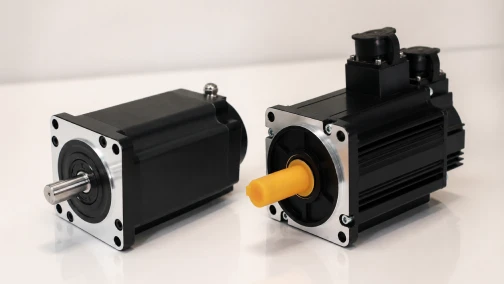
Answer: A stepper motor uses open-loop control and moves in fixed steps by counting driver pulses, so it does not need feedback under normal use. A servo motor uses closed-loop control with an encoder that reports actual shaft position back to the drive, which corrects any error in real time. The result is that steppers are simpler and cheaper, while servos are faster, more accurate under load, and handle much higher inertia ratios.
Question: Is a servo motor always more accurate than a stepper motor?
Answer: Not always. A stepper motor with quality tooth geometry is accurate to about ±0.05° and is highly repeatable in point-to-point moves. A servo can reach ±0.01° or better, but only with proper encoder resolution and correct tuning. Where the servo pulls ahead is dynamic accuracy — positioning while the load changes or during high-speed contouring.
Question: Can I replace a servo motor with a stepper motor to save cost?
Answer: Sometimes. If your application runs below 1,000 RPM, has a stable load, and does not need real-time position correction, a properly sized stepper can replace a servo and cut cost significantly. If the servo was chosen for high speed, variable load, or coordinated multi-axis motion, replacing it with a stepper usually causes missed steps, longer cycle times, or both.
Question: Do stepper motors hold position better than servo motors when powered off?
Answer: When power is off, neither motor holds position on its own — a stepper loses detent torque and a servo loses its holding current. Steppers do hold position without a brake when the coils are energised, which servos generally require a mechanical brake to do. For vertical or safety-critical axes, both technologies typically use a brake to hold load when de-energised.
Question: When should I choose a closed-loop stepper motor instead of a servo?
Answer: Closed-loop steppers make sense when you need the missed-step protection of a servo but still want strong holding torque, a compact frame, and lower cost. They fit applications where load can occasionally spike but average duty is steady — labelling machines, medical devices, textile equipment, engraving. If the axis runs at high RPM continuously or needs 3× peak torque for acceleration, a full servo is still the better choice.
Question: Why do stepper motors get so hot even when they are not moving?
Answer: A stepper draws its rated current whenever the coils are energised, including at standstill. That current turns into heat in the windings. Modern drivers reduce standstill current to about 50% of run current to limit heating, and closed-loop drivers reduce it further because they only draw the current needed to hold position. Proper thermal design of the mounting bracket also helps dissipate heat during long duty cycles.
Question: How do I know if my application needs a 2-phase or 3-phase stepper?
Answer: A 2-phase stepper is the industry default: 1.8° step, wide model range from NEMA 8 to NEMA 42, and inexpensive drivers. A 3-phase stepper delivers smoother rotation, lower vibration, and better high-speed torque, which suits applications like large-format engraving, high-speed laser processing, and heavy CNC axes. If your speed and smoothness requirements push a 2-phase to its limit, moving to 3-phase often solves the problem before you need to jump to a servo.
-

Cymotorix
Stepper Motor & Servo Motor Manufacture
Cymotorix is a China-based motor manufacturer with 20+ years of experience producing hybrid stepper motors, AC servo motors, and matched drivers for OEM customers worldwide.