
NEMA Stepper Motor Sizes Explained: From NEMA 8 to NEMA 42
A frame-size and torque guide for engineers and OEM buyers, from the Cymotorix motion control team.
Ask three engineers what “NEMA 23” tells you and you often get three answers. One thinks it is a torque rating, one thinks it is the motor length, and one just knows it as the size that fits their bracket. Only the last is close. A NEMA number describes the mounting face of the motor and nothing else, and treating it as a measure of power is one of the most common reasons a motor ends up wrong for the job.
This guide explains what each NEMA frame from NEMA 8 to NEMA 42 actually means, the dimensions and typical torque you can expect, and how to pick the right frame for your machine. We build steppers across this whole range for CNC, 3D printing, medical, textile, and factory automation, so the numbers below reflect what these frames deliver in real equipment.
Quick Answer: What a NEMA Size Means
A NEMA size is the width of the motor's mounting faceplate in tenths of an inch. NEMA 17 has a 1.7 inch (42 mm) face, NEMA 23 has a 2.3 inch (57 mm) face, and NEMA 34 has a 3.4 inch (86 mm) face. The standard fixes the faceplate size, the bolt-hole pattern, and the pilot diameter so motors from different suppliers bolt into the same mount. It says nothing about torque, current, speed, or how long the motor is. To choose a motor, start with the frame that fits your space, then select the torque you need by picking the right body length and winding within that frame.
What the NEMA Number Actually Defines
To properly specify a motor, it is crucial to separate the mechanical mounting standards from electrical and torque performance specifications. The NEMA designation addresses only the physical interface.
A mounting standard, not a performance rating
The NEMA frame sizes for steppers come from the NEMA ICS 16 standard, which sets the flange dimensions and mounting-hole positions for motion-control motors. That is the whole scope. Two motors labeled NEMA 23 can have completely different torque, current draw, and step accuracy while sharing the same 57 mm face and bolt pattern. Spec a motor by frame number alone and you only guarantee it will bolt on. Whether it moves your load is a separate question, answered by the torque and speed specs.
The most reliable way to identify an unknown motor's frame is to measure the diagonal spacing between mounting holes and compare it against the standard. Faceplates are sometimes cut with rounded or trimmed edges, which makes a tape measure across the face misleading.
Body length is the real torque variable
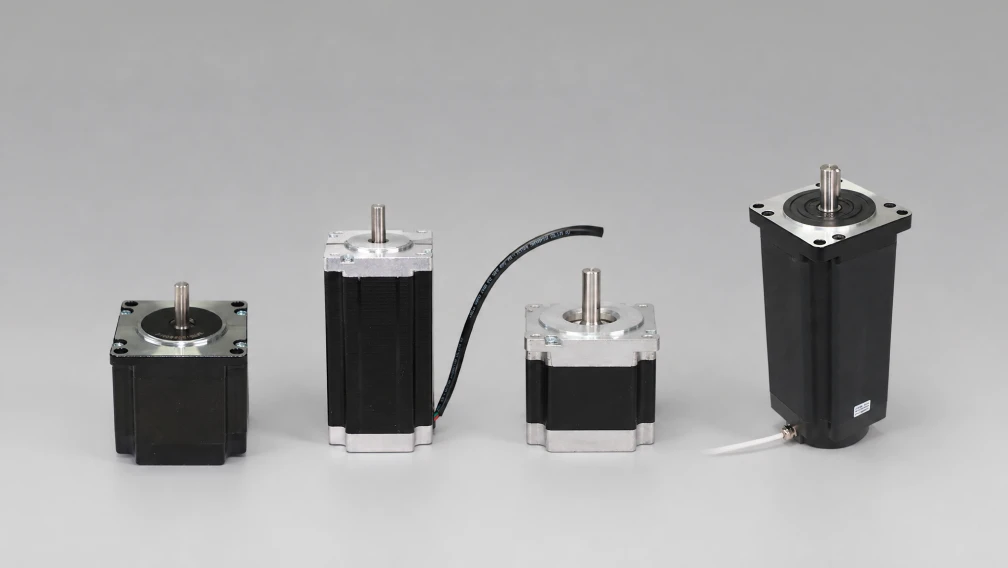
Within one frame size, torque scales mainly with the motor's stack length, the depth of laminations and windings behind the faceplate. A longer body packs more copper and a deeper rotor, which raises torque, and the effect is large. A 56 mm NEMA 23 might produce around 1 N·m, while a 112 mm NEMA 23 with the same face reaches about 3 N·m. Same mount, triple the torque, from length alone.
That is why a long NEMA 17 can out-pull a short NEMA 23 in some builds. Where the smaller frame gives ground is cooling and pulling force: less surface area to shed heat during long duty cycles, and a smaller rotor. So body length, not just the frame number, is the spec to watch when you compare motors or replace one in an existing machine.
NEMA Stepper Motor Size Chart
The table lists the standard frames we build, with faceplate size, the holding torque range typical for each, and where each frame usually lands. Holding torque changes with body length and winding, so treat these as working ranges, not fixed values.
| NEMA Size | Faceplate | Typical Holding Torque | Where It Fits |
| NEMA 8 | 20 mm (0.8 in) | 0.01 to 0.06 N·m | Micro-positioning, optics, small medical pumps |
| NEMA 11 | 28 mm (1.1 in) | 0.05 to 0.15 N·m | Benchtop instruments, small robotics, dosing |
| NEMA 14 | 35 mm (1.4 in) | 0.1 to 0.3 N·m | Small 3D printers, drones, precision instruments |
| NEMA 17 | 42 mm (1.7 in) | 0.2 to 0.7 N·m | 3D printers, light CNC, robotics, lab automation |
| NEMA 23 | 57 mm (2.3 in) | 0.5 to 3.0 N·m | CNC routers and mills, laser cutters, automation |
| NEMA 24 | 60 mm (2.4 in) | 1.0 to 4.0 N·m | Higher-torque automation, mid-size CNC |
| NEMA 34 | 86 mm (3.4 in) | 3.0 to 12 N·m | Large CNC routers, plasma tables, heavy machinery |
| NEMA 42 | 110 mm (4.2 in) | 12 to 30 N·m | Large CNC mills, conveyors, heavy positioning |
The Frames One by One
Stepper motors are available in a wide spectrum of physical dimensions, each suited for distinct industrial and commercial applications. The following breakdown highlights the capabilities and typical deployment scenarios for the most common frame sizes.
NEMA 8 and NEMA 11: micro and compact
NEMA 8 (20 mm face) and NEMA 11 (28 mm face) sit at the small end of the range. NEMA 8 delivers roughly 0.01 to 0.06 N·m and suits micro-positioning: optical stages, small medical pumps, semiconductor handling, and instruments where space is tight. NEMA 11 steps up to about 0.05 to 0.15 N·m, enough for benchtop lab equipment, small robotic joints, and compact dosing. Both trade torque for size, so use them where the load is genuinely light.
NEMA 14 and NEMA 17: the desktop workhorses
NEMA 14 (35 mm) bridges the micro frames and the mainstream, giving around 0.1 to 0.3 N·m for small 3D printers, drones, and precision instruments where every gram matters. NEMA 17 (42 mm) is the de facto standard for desktop motion. With holding torque from about 0.2 to 0.7 N·m depending on length, a 5 mm shaft, and 1 to 2 A per phase, it drives most 3D printer axes and extruders, light CNC routers, small robots, and lab automation. Its 1.8° step (200 steps per revolution) plus microstepping covers the resolution most desktop machines need.
NEMA 23 and NEMA 24: light industrial
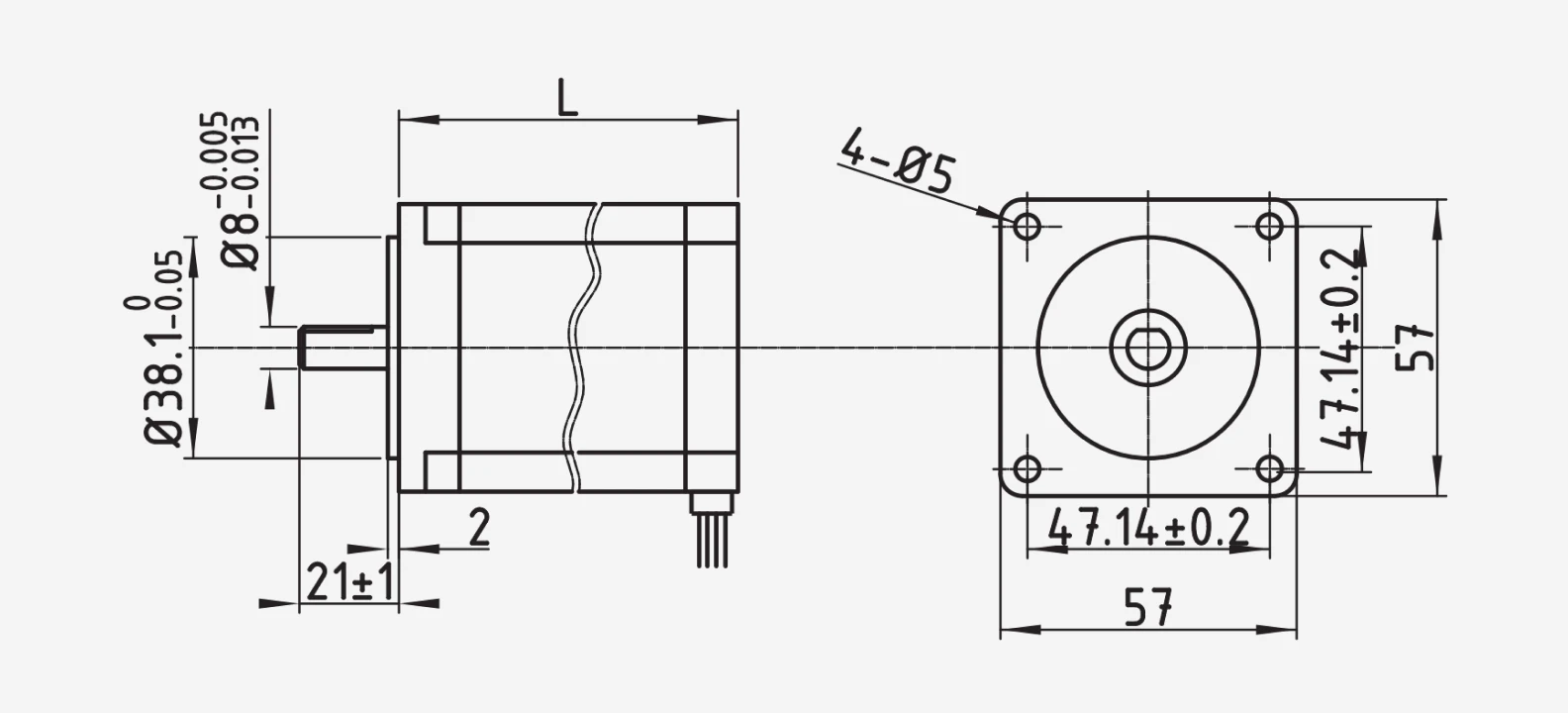
NEMA 23 (57 mm) is where torque starts to handle real cutting and material-moving loads: roughly 0.5 to 3.0 N·m, drawing 2 to 4 A per phase. It is the go-to for CNC routers and mills, laser cutters, engravers, and general automation. NEMA 24 (60 mm) is a close cousin with a slightly larger face and more torque, useful when a NEMA 23 runs out of room on the torque curve but you want to stay compact. Both usually move up to a 6.35 mm or 8 mm shaft, so check your coupler bore before ordering.
NEMA 34 and NEMA 42: heavy duty
NEMA 34 (86 mm) delivers about 3 to 12 N·m and drives large CNC routers, plasma tables, heavy gantries, and industrial machinery. Current and heat climb at this size, so these frames need capable drivers and a solid power supply, and they are often run closed-loop for missed-step protection on unattended machines. NEMA 42 (110 mm) is the top of the standard range, producing roughly 12 to 30 N·m for the largest CNC mills, conveyors, and heavy positioning. Both reward careful driver and voltage matching to reach rated torque at speed.
How to Choose the Right NEMA Size
Frame selection is a torque and space problem before it is a catalog problem. This is the sequence we walk OEM customers through.
1. Start from load and space, not the frame number. Work out the torque your axis needs, covering friction, gravity on vertical axes, acceleration, and any process force. Then find the smallest frame that delivers it with margin and still fits your mounting envelope.
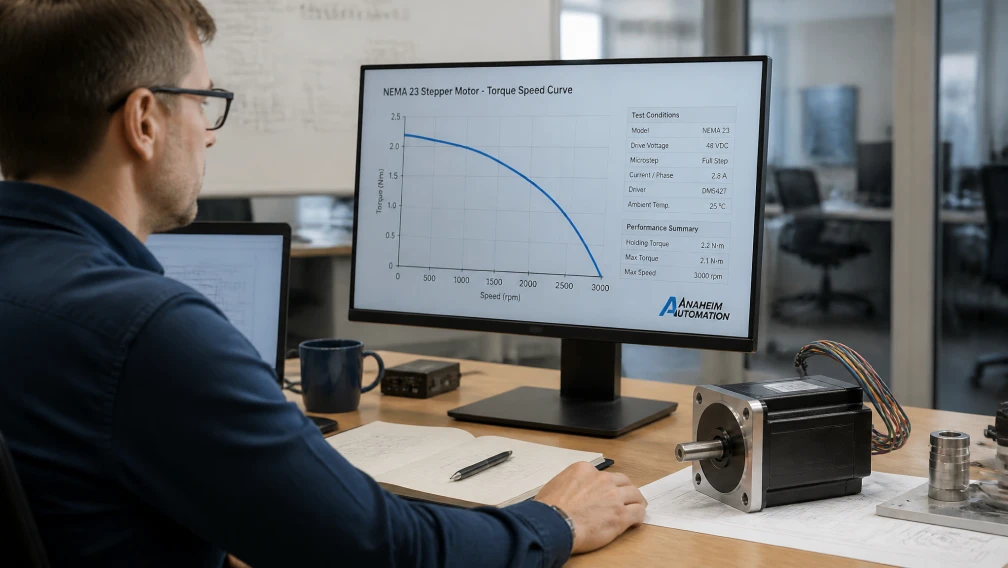
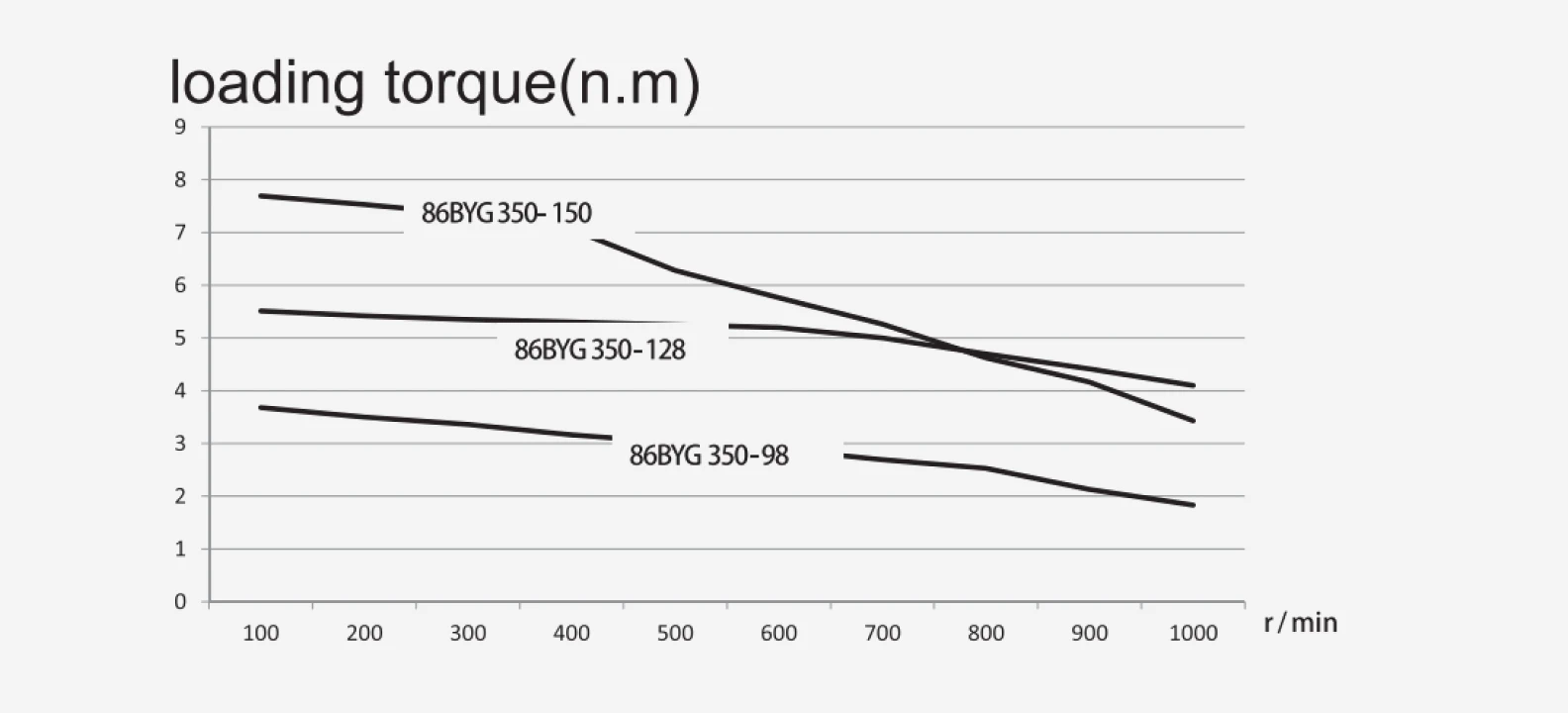
2. Size on torque with margin, and read the torque-speed curve. Holding torque is the figure on the label, but your axis runs at speed, and stepper torque drops as speed rises. Check the dynamic torque at your target RPM on the torque-speed curve and leave 30 to 50 percent margin for open-loop reliability.
3. Match current and voltage to your driver. A frame's torque only shows up if the driver can push the rated phase current, and longer, higher-inductance motors need higher supply voltage to hold torque at speed. Confirm the driver's current rating meets the motor and the supply voltage suits the winding.
4. Watch inertia and avoid oversizing. A frame much larger than needed adds rotor inertia, raises cost and current, and can hurt microstepping smoothness. Bigger is not automatically better.
5. Confirm the mechanical details. Match shaft diameter to your coupler or pulley bore, check whether you need a single or dual shaft, and verify the body length clears neighboring brackets, especially when replacing an existing motor.
Holding Torque vs Dynamic Torque
Holding torque is the maximum torque a stepper resists when it is energized and standing still. Dynamic torque, sometimes called pull-out torque, is what the motor delivers while turning, and it falls off as speed increases. A motor rated at 3 N·m holding might deliver far less at 1,000 RPM. This is the number that decides whether an axis keeps up at speed, so size from the torque-speed curve at your operating point rather than the holding figure on the datasheet.
Phase Count and Closed-Loop Options
Most NEMA steppers are 2-phase hybrids with a 1.8° step, the industry default that pairs with inexpensive drivers. A 2-phase stepper motor covers the majority of frames from NEMA 8 to NEMA 42. A 3-phase stepper motor runs smoother with less vibration and better high-speed torque, which helps on large engraving and high-speed axes. If missed steps are a risk, a closed-loop stepper motor adds encoder feedback and stall detection while keeping the strong holding torque and compact frame of a stepper, at a fraction of a servo's cost.
Common Mistakes When Choosing a NEMA Size
Assuming a bigger frame means more power. Torque comes from body length and winding as much as frame size. A long NEMA 17 can beat a short NEMA 23. Size on the torque-speed curve, not the frame number.
Ignoring body length. Two motors with the same NEMA face can differ two or three times in torque. Always check the stack length and the torque spec, not just the frame.
Forgetting current and voltage. A high-torque motor on an underpowered driver will miss steps or overheat. Match the driver current to the motor and give longer motors enough supply voltage.
Swapping frames without checking clearance. The faceplate always fits within a frame, but a longer body or larger shaft can crash into brackets or fail to seat in a coupler. Check length and shaft before you order a replacement.
Get Help Choosing the Right Stepper Motor
Frame size is the starting point, but the right motor depends on your load, speed profile, duty cycle, and driver. Send us those details and we will size the frame, body length, winding, and driver together, with torque-speed curves and pricing side by side. Browse our full stepper motor range or contact our engineering team to start a project review.
FAQ
Question: What does the number in a NEMA stepper motor mean?
Answer: It is the width of the motor's mounting faceplate in tenths of an inch. NEMA 17 is a 1.7 inch (42 mm) face, NEMA 23 is 2.3 inch (57 mm), and NEMA 34 is 3.4 inch (86 mm). The number describes mounting size only, not torque, current, or motor length.
Question: Does a larger NEMA size always mean more torque?
Answer: No. Frame size sets the mounting face, but torque depends heavily on body length and winding design. A long NEMA 17 can produce more torque than a short NEMA 23. Compare the actual holding and dynamic torque specs, not just the frame number.
Question: How do I identify the NEMA size of a motor I already have?
Answer: Measure the diagonal spacing between the mounting holes and compare it to the NEMA standard, or measure the faceplate width. Hole spacing is the most reliable method because some faceplates have rounded or trimmed edges.
Question: What is the difference between holding torque and dynamic torque?
Answer: Holding torque is the torque a stepper resists at standstill when energized. Dynamic, or pull-out, torque is what it delivers while turning, and it drops as speed rises. Size your motor from the torque-speed curve at your operating speed, not from holding torque alone.
Question: Which NEMA size should I use for a 3D printer or a CNC router?
Answer: NEMA 17 covers most 3D printers and light CNC routers. Mid-size and production CNC routers usually move to NEMA 23 or NEMA 24, and large routers and mills use NEMA 34 or NEMA 42. Match the frame to your axis torque and cutting loads.
Question: Can I get more torque by fitting a larger NEMA frame?
Answer: Often yes, but check three things first: whether the larger frame fits your mounting space, whether your driver can supply the higher current, and whether the added inertia suits your speed and acceleration. Sometimes a longer motor in the same frame is the better fix.
Question: Are 42 mm motors the same as NEMA 17?
Answer: Effectively yes. True NEMA 17 is 43.2 mm, and most 42 mm motors are sold and mounted as NEMA 17. The small difference does not affect mounting compatibility.
-

Cymotorix
Stepper Motor & Servo Motor Manufacture
Cymotorix is a China-based motor manufacturer with 20+ years of experience producing hybrid stepper motors, AC servo motors, and matched drivers for OEM customers worldwide.