
The Engineering Limitation of Open-Loop Architecture
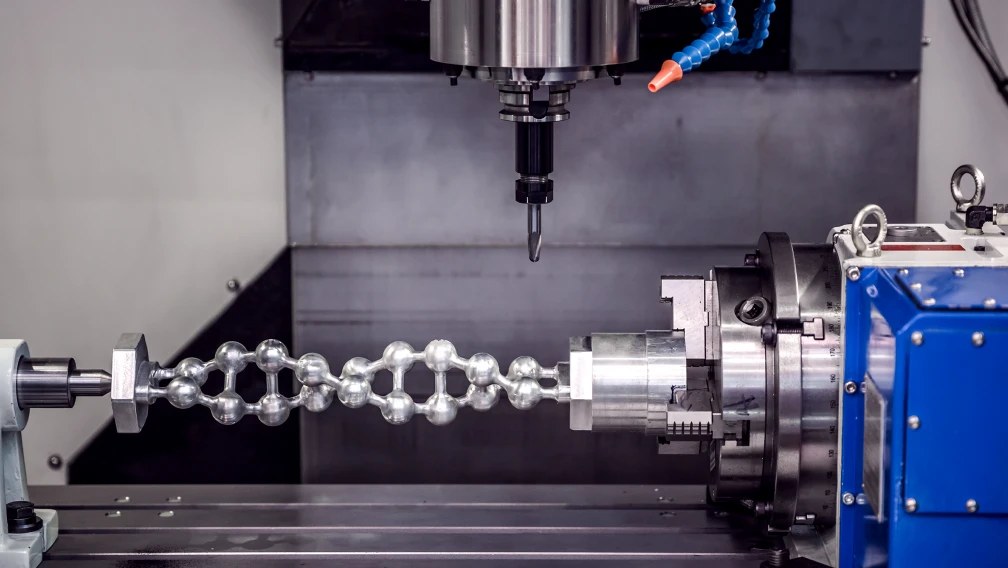
For decades, automation engineers specified open-loop stepper systems for their simplicity and cost-effectiveness. By sending a defined number of electrical pulses to a drive, the controller mathematically assumed the motor shaft rotated a corresponding physical distance. This assumption holds true only if the mechanical load never exceeds the motor's dynamic pull-out torque. If a CNC cutting tool encounters a hard material knot, or if a linear bearing binds temporarily, the rotor falls behind the magnetic stator field, loses synchronism, and stalls. Because there is no feedback mechanism, the controller continues to index the coordinate system, resulting in a scrapped workpiece or a severe mechanical collision.
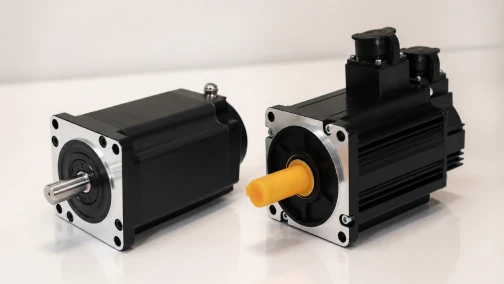
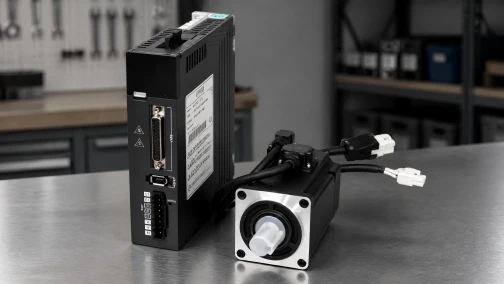
To guarantee positional accuracy, engineers traditionally migrated to high-voltage AC servo motors. However, this introduces immense complexity in PID tuning, high hardware costs, and strict inertia matching requirements. The closed loop stepper motor (frequently referred to as a hybrid servo) merges the high-pole-count mechanical stiffness of a stepper with the dynamic error-correction algorithms of a servo. This technical manual details the hardware architecture, Field-Oriented Control (FOC) mechanics, thermal efficiency benefits, and inertia tolerance of closed-loop stepper systems.
1. Hardware Architecture: Integrating High-Resolution Feedback
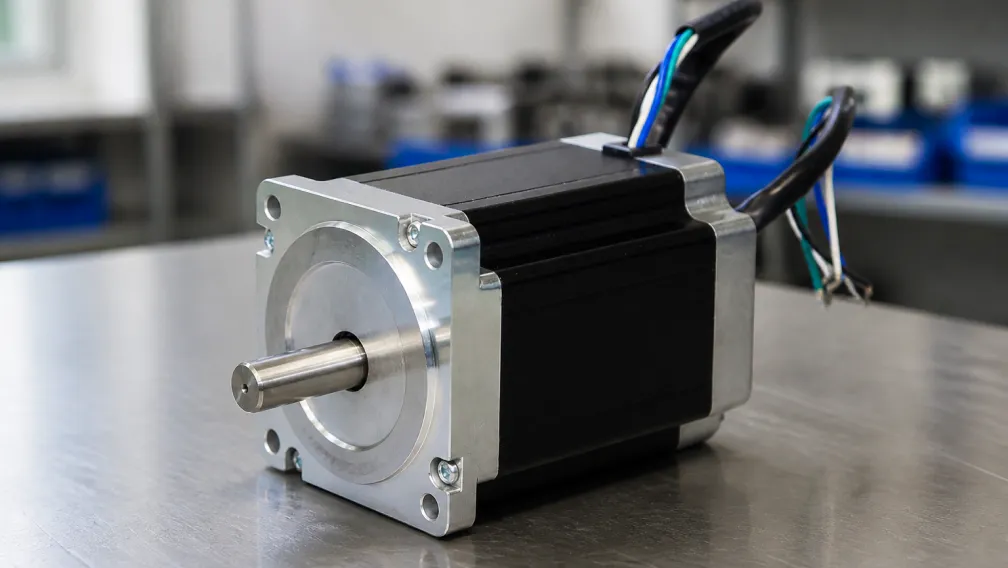
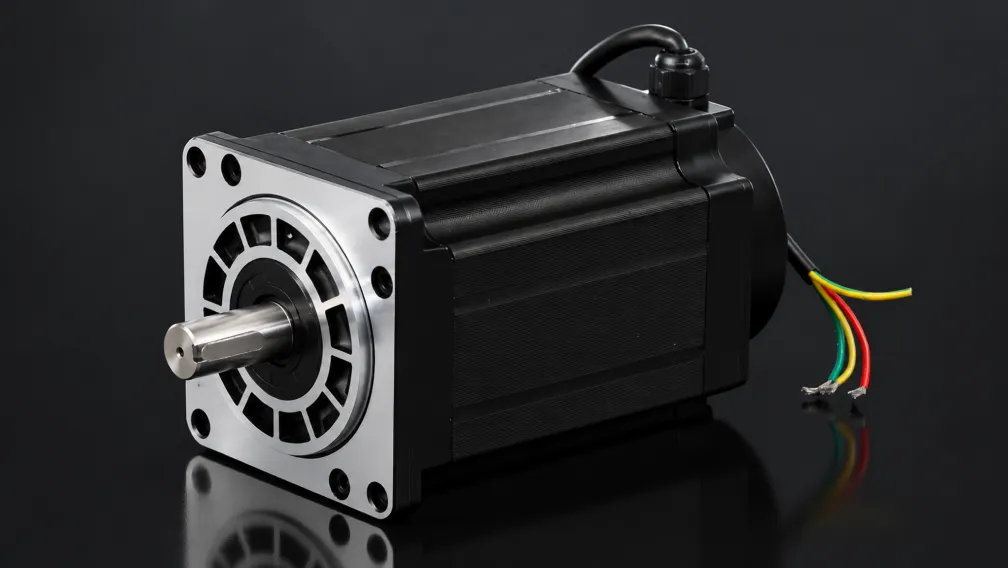
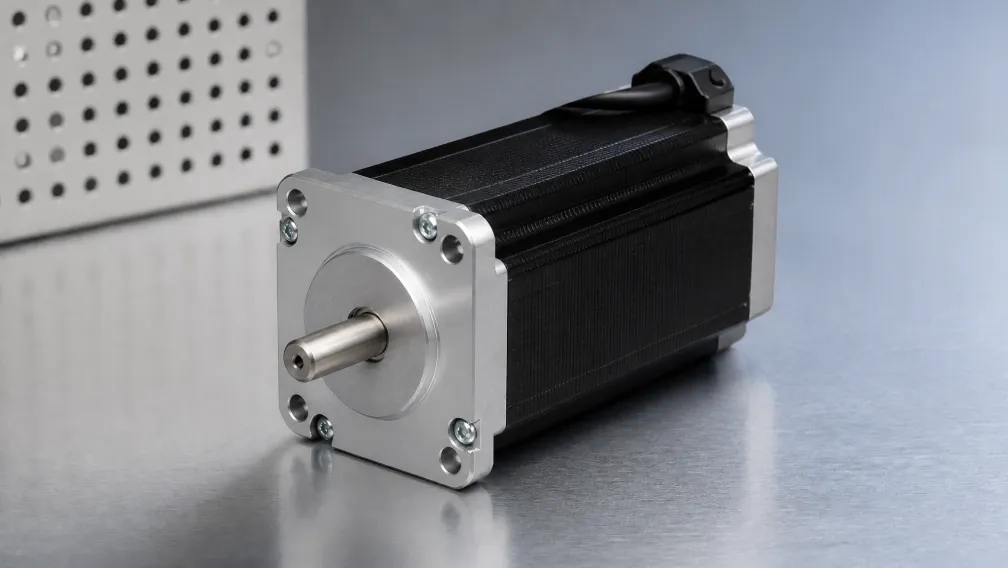
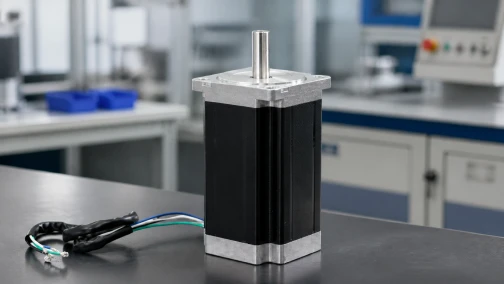
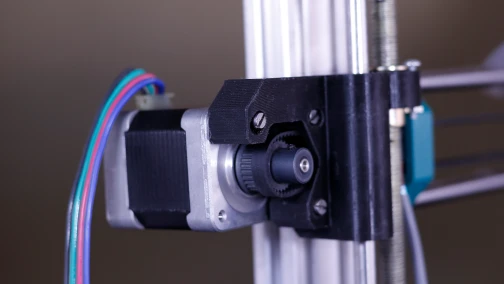
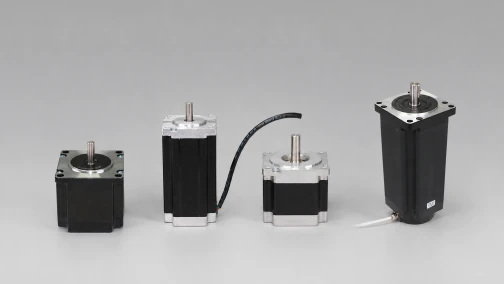
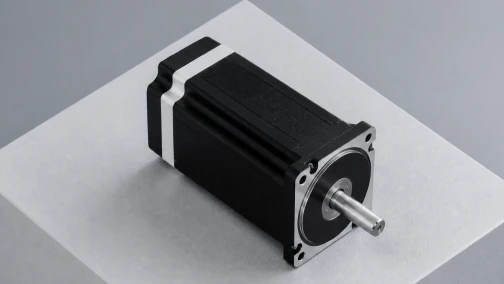
A closed-loop stepper motor begins with the physical baseline of a standard 2-phase or 3-phase hybrid stepper. The rotor possesses a high tooth count (typically 50 teeth), resulting in a native physical step angle of 1.8 degrees or 1.2 degrees. This high pole density provides the motor with massive continuous holding torque and rigid standstill stability without the continuous positional hunting common to low-pole-count AC servos.
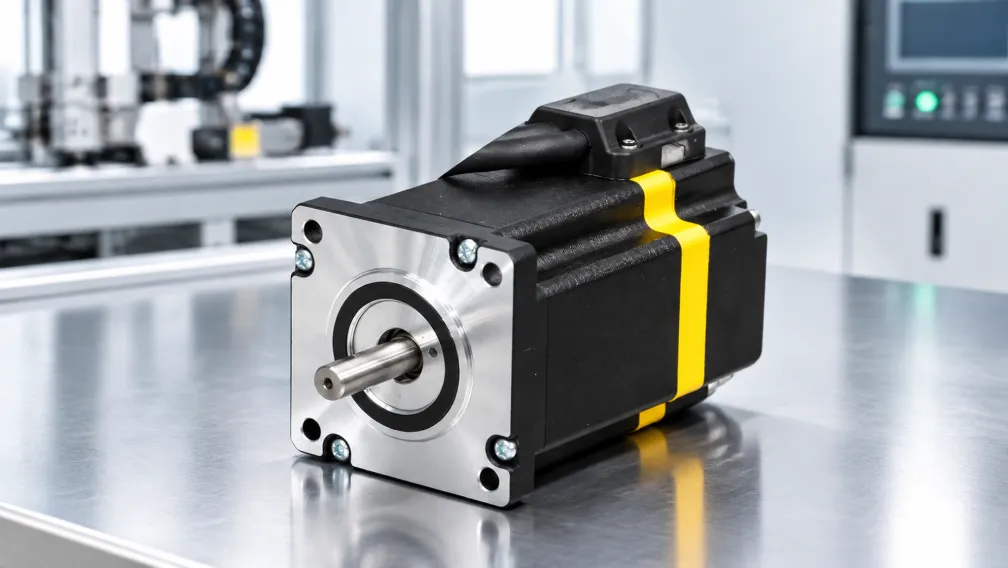
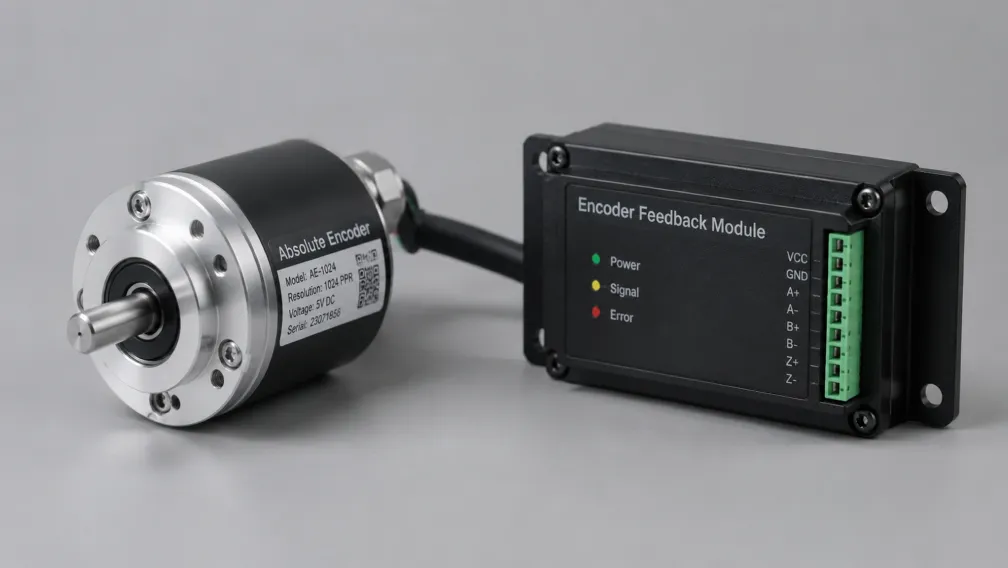
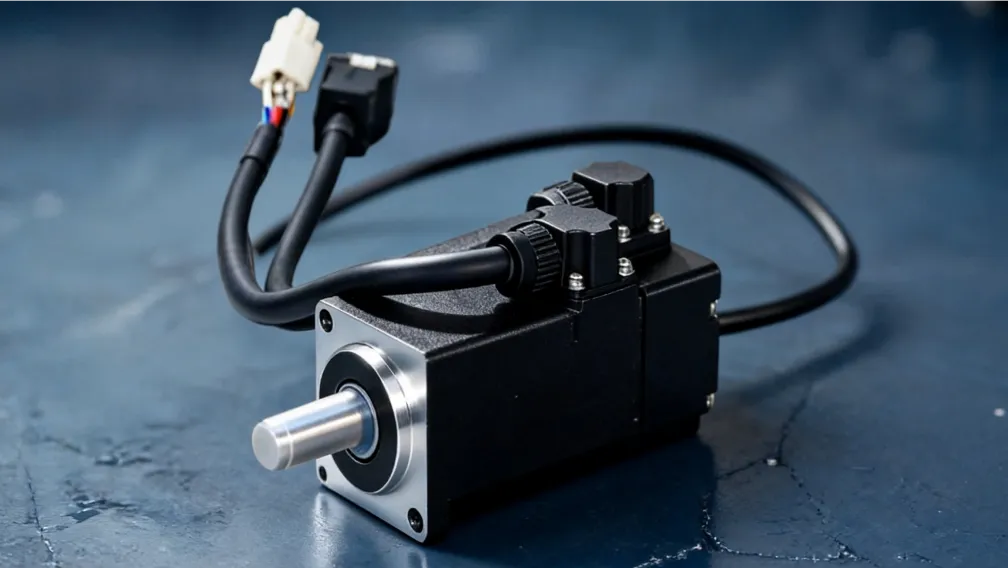
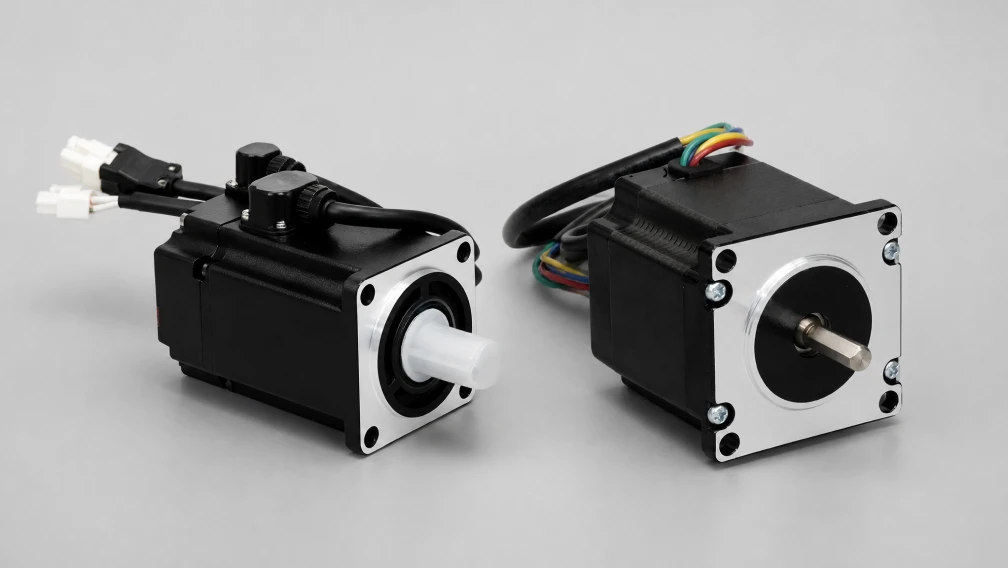
The transformation into a closed-loop platform occurs at the rear shaft. Manufacturers permanently mount a high-resolution absolute or incremental encoder directly to the rotor. Industrial closed-loop units utilize optical or magnetic encoders with resolutions ranging from 1,000 to 4,000 pulses per revolution (4,000 to 16,000 counts in quadrature). This encoder provides a continuous stream of real-time physical position data back to the drive, effectively closing the positional loop entirely within the drive hardware before the main machine controller ever registers a deviation.
2. The Mechanics of Field-Oriented Control (FOC)
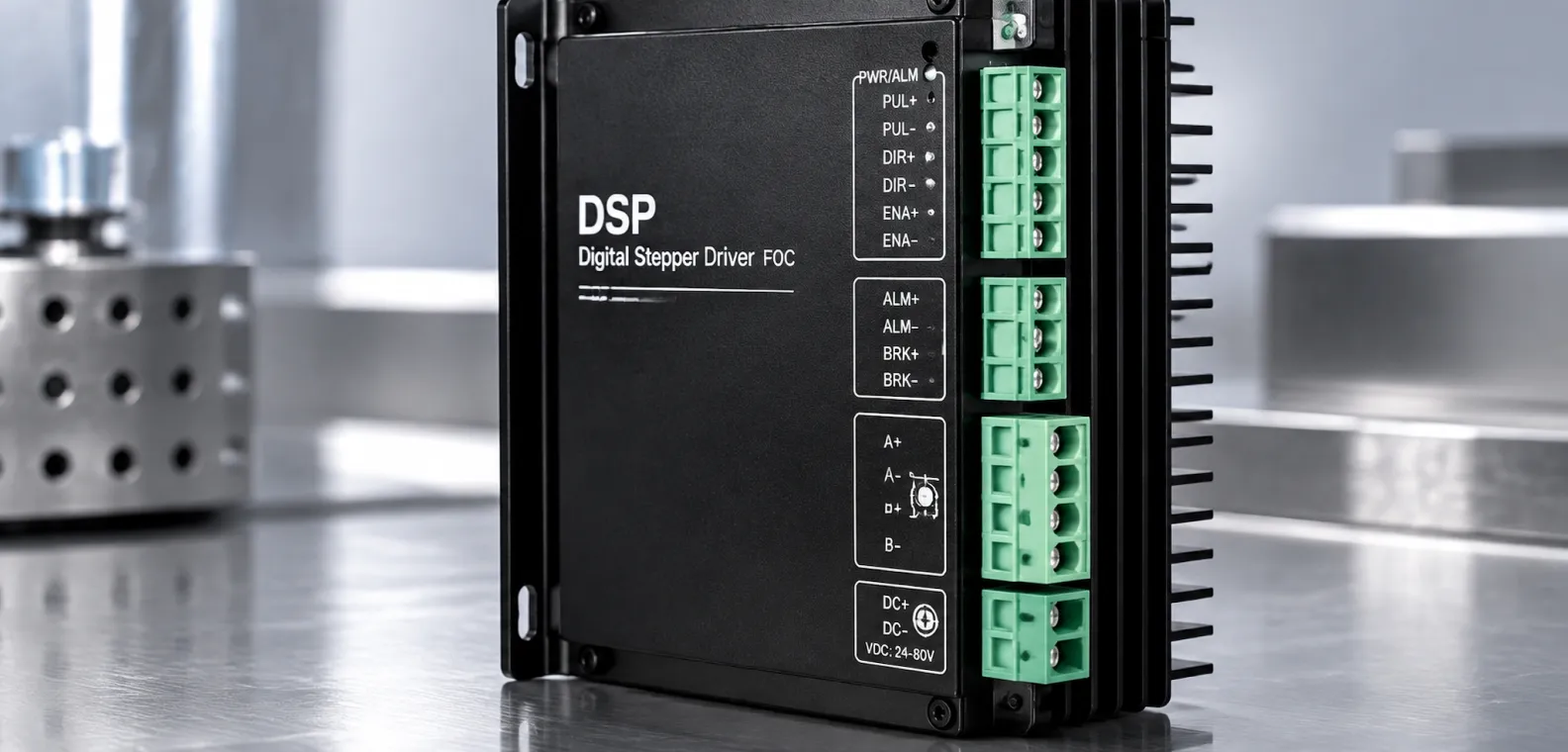
Standard open-loop drives utilize simple step-and-direction tracking. They apply a constant, predetermined current to the stator coils based on the microstep configuration, regardless of whether the motor is pushing maximum payload or spinning freely. Closed-loop stepper motor drivers execute Field-Oriented Control (FOC), the exact algorithm utilized by advanced AC servo amplifiers.
The FOC algorithm continuously monitors the exact angular position of the rotor via the encoder. Instead of applying fixed square or synthesized sine waves blindly, the drive mathematically calculates the precise electrical current vector required to generate the optimal magnetic flux angle (typically maintained at 90 electrical degrees ahead of the rotor). By analyzing the position error (the difference between the commanded coordinate and the actual encoder coordinate), the drive scales the magnitude of the current dynamically. If the position error is zero, the drive reduces current to a minimum holding level. If a mechanical obstruction causes the rotor to lag, the drive instantaneously increases the current vector to maximum peak capacity to overcome the obstruction and close the error gap.
3. Eradicating Step Loss and Stalling
The defining performance metric of a closed-loop stepper is its physical inability to lose synchronization permanently. In an open-loop system, crossing the pull-out torque threshold results in an immediate stall, accompanied by a high-pitched squeal as the rotor vibrates against the rotating stator field.
When a closed-loop stepper encounters a transient mechanical overload that exceeds its continuous torque capacity, the FOC algorithm prevents desynchronization. The drive detects the rising position error, saturates the phase coils with maximum current, and allows the motor to temporarily lag behind the commanded trajectory profile. The motor behaves as an elastic mechanical spring. Once the transient mechanical spike clears, the drive utilizes the accumulated error data to accelerate the rotor, "catching up" to the target trajectory seamlessly. If the physical jam is permanent and the motor cannot overcome it within a programmable tracking error window, the drive shuts down safely and sends a rigid fault signal to the PLC, preventing blind operation.
4. Thermal Efficiency and Acoustic Mitigation
Heat dissipation is a primary failure mode in densely packed automation cabinets and medical devices. Open-loop stepper motors are highly inefficient regarding thermal management. Because the drive does not know the actual load status, it must pump 100% of the configured RMS current into the windings continuously to prevent a hypothetical stall. This results in massive I²R (copper loss) heat generation, often pushing the motor housing temperature above 85°C even when the machine is idling.
A closed-loop stepper operates on a "current on demand" principle. During high acceleration, it supplies peak current. During constant velocity cruise with low friction, it drops the current to match the minimal kinetic requirement. At standstill, it drops the holding current to less than 10% of the rated value. This dynamic current regulation reduces the motor's operating temperature by 30°C to 40°C compared to an equivalent open-loop setup. Additionally, by eliminating over-current saturation, the physical torque ripple is smoothed, drastically reducing audible acoustic whine and mid-band mechanical resonance.
5. The Inertia Matching Advantage Over AC Servos
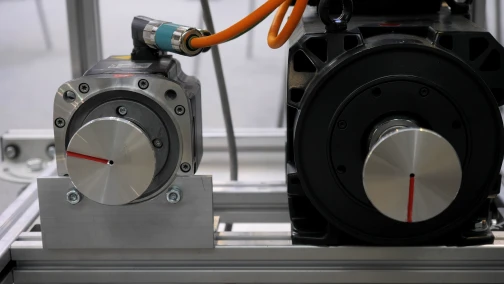
While AC servos dominate high-speed applications above 3,000 RPM, they are notoriously sensitive to load inertia. An AC servo features a low-mass, low-pole-count rotor designed for extreme acceleration. If the payload mass attached to the servo (reflected load inertia) is significantly larger than the rotor's internal inertia, the PID velocity loop becomes highly unstable. Engineers must heavily gear down servos to maintain an inertia mismatch ratio below 10:1; otherwise, the axis will oscillate violently and fail to settle on a coordinate.
Closed-loop steppers inherently possess massive, high-inertia rotors combined with 50-pole magnetic stiffness. This architectural geometry makes them incredibly forgiving to large inertia mismatches. A NEMA 34 closed-loop stepper can directly drive a heavy indexing turntable or a massive belt-driven gantry with a 30:1 inertia mismatch without requiring complex PID loop auto-tuning or expensive planetary gearboxes. The motor remains dead-still at rest, completely immune to the micro-dithering (hunting) that plagues servos connected to compliant loads.
6. Engineering Selection Criteria for Closed-Loop Upgrades
Question: How do automation engineers decide whether an axis requires a closed-loop stepper motor or a full AC servo system?
Answer: Engineers evaluate the maximum required velocity and the inertia ratio. If the axis requires continuous operation at 3,000 RPM, extreme sub-millisecond settling times, and highly synchronized multi-axis interpolation (e.g., 5-axis CNC contouring), the AC servo is mandatory. If the axis requires massive low-speed torque, operates primarily below 1,500 RPM, drives a heavy/fluctuating payload with high inertia mismatch, and requires absolute standstill stability without dithering (e.g., optical inspection tables, heavy fluid dispensing, automated packaging), the closed-loop stepper is the superior engineering choice due to its native stiffness and lower integration cost.
7. Retrofitting Open-Loop Machinery
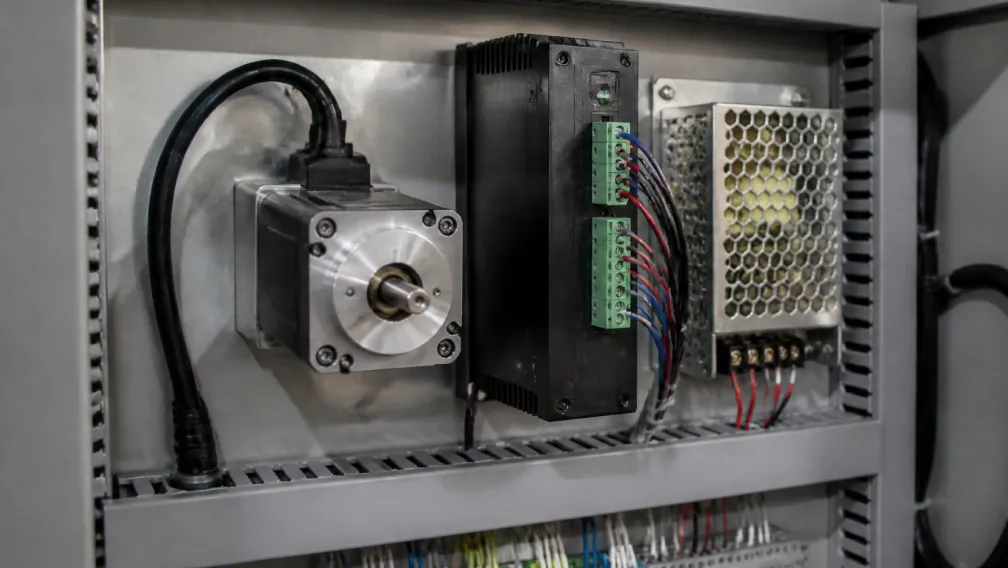
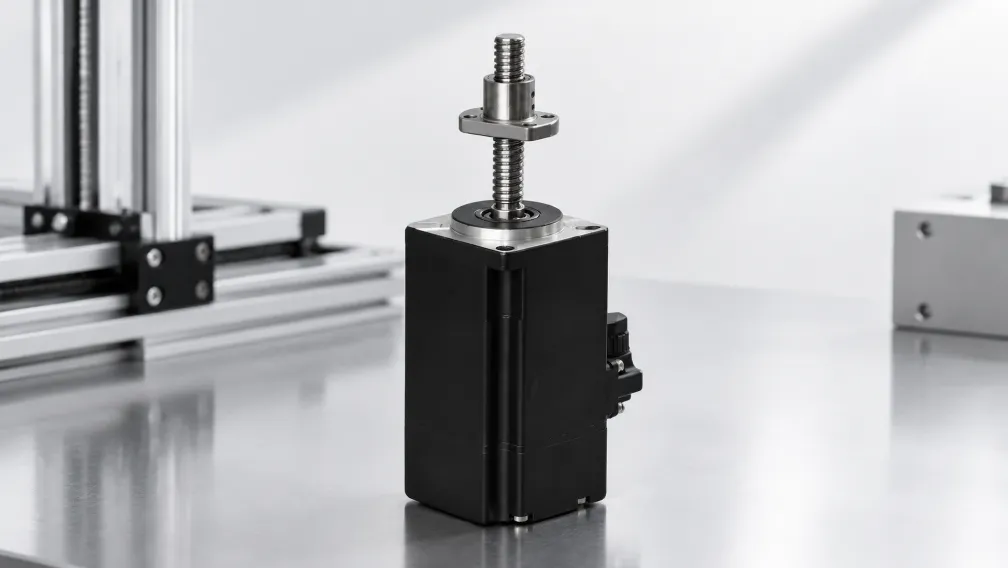
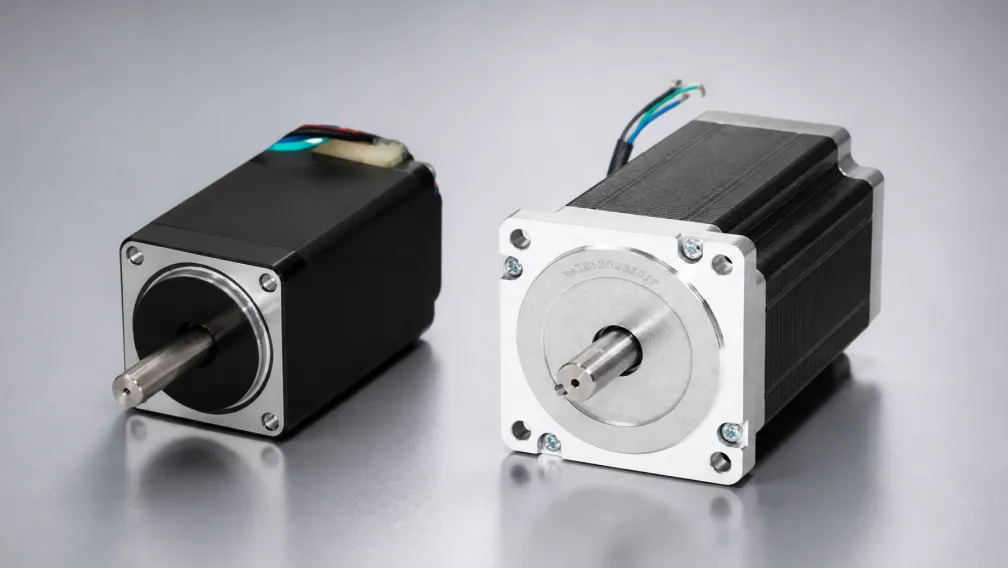
Upgrading an existing machine to closed-loop reliability is mechanically straightforward. Closed-loop stepper motors conform to identical NEMA flange dimensions as their open-loop counterparts. A NEMA 23 closed-loop stepper bolts directly into the existing mounting bracket of a legacy machine, utilizing the same shaft diameter and mounting holes.
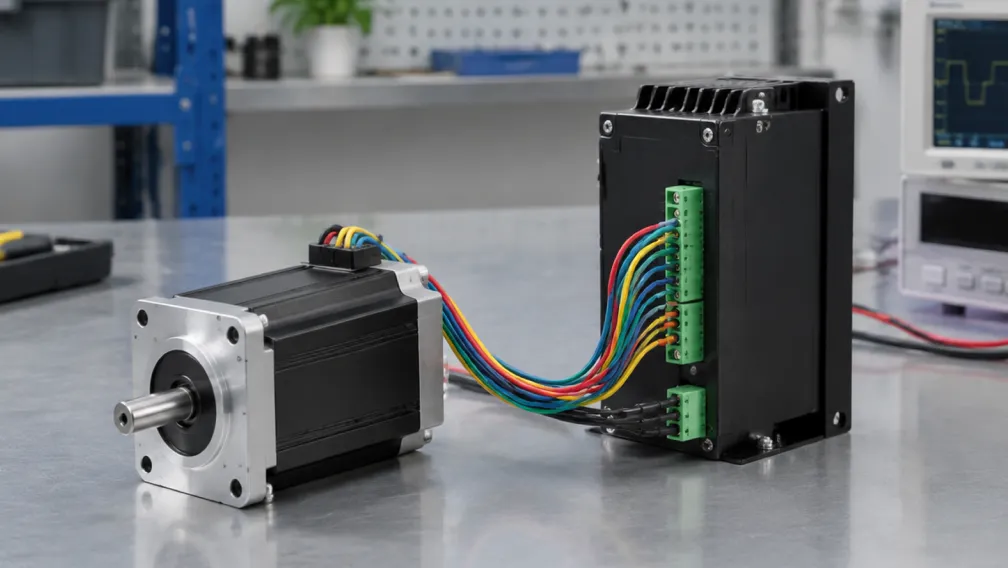
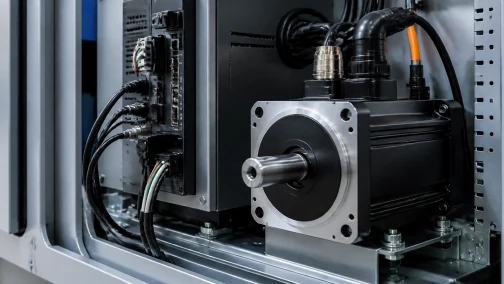
The electrical integration requires replacing the driver and routing the new encoder feedback cable directly from the motor to the dedicated closed-loop drive. The main CNC controller or PLC requires no reprogramming, as the closed-loop drive accepts the exact same standard Step and Direction (Pulse/DIR) signals. The drive handles all error correction internally, making it a completely transparent drop-in upgrade for the master controller.
Engineering Support and System Integration
Specifying a closed-loop motion architecture guarantees machine reliability by entirely eliminating the risk of unmonitored step loss. Cymotorix manufactures a complete portfolio of high-torque closed-loop stepper motors ranging from NEMA 17 to NEMA 42, paired with DSP-based FOC digital drives. Our technical team supports OEMs with inertia matching calculations, pull-out torque evaluations, and drive parameter tuning. Complete 3D CAD models, wiring schematics, and mechanical dimensional drawings are available through our download center. Contact our technical engineering department to evaluate your payload specifications and upgrade your automation equipment.
Frequently Asked Questions (FAQ)
Question: Does a closed-loop stepper motor have more holding torque than an open-loop stepper motor of the same size?
Answer: No. The absolute maximum physical holding torque is determined by the stator lamination length and the rotor diameter, which are identical for both open and closed-loop motors in the same frame size. The advantage of the closed-loop system is that it utilizes the full available torque dynamically on demand without the risk of stalling, rather than increasing the physical baseline torque.
Question: Can a closed-loop stepper motor run faster than a traditional open-loop stepper?
Answer: Yes, in practical application. Because the closed-loop drive utilizes Field-Oriented Control (FOC) to monitor the exact rotor angle, it continuously optimizes the phase commutation timing. This precise commutation prevents the mid-band resonance and torque ripple that typically choke an open-loop motor, allowing the closed-loop variant to maintain a flatter torque curve and operate reliably at higher RPMs without desynchronizing.
Question: Why does my closed-loop stepper motor run significantly cooler than my old open-loop motor?
Answer: An open-loop drive constantly pumps 100% of the set current into the motor to ensure it doesn't stall, generating massive I²R heat regardless of the actual mechanical load. A closed-loop drive reads the encoder and applies only the specific amount of current necessary to move the payload. When idling or moving light loads, the current drops drastically, eliminating unnecessary waste heat.
Question: What happens if a closed-loop stepper motor hits a physical mechanical jam?
Answer: The drive instantly detects the position error via the encoder and ramps phase current to maximum to attempt to push through the jam. If the obstruction is immovable, the motor will not screech or lose steps blindly. After a programmable tracking error threshold is exceeded (e.g., 1000 encoder counts), the drive will safely disable the motor and send a fault signal to the PLC to halt the machine.
Question: Do I need to reprogram my PLC or CNC controller to upgrade to a closed-loop stepper?
Answer: No. The closed-loop drive accepts the standard Pulse and Direction (Step/Dir) signals generated by any standard controller. The position verification and error correction happen entirely within the drive hardware. To the master controller, the system simply appears as a perfect, stall-free stepper axis.
Question: Why is a closed-loop stepper better than an AC servo for driving a heavy, unbalanced load?
Answer: AC servos have low-inertia rotors that are highly sensitive to load variations. Driving a heavy, compliant load with a servo often causes violent oscillation and positional hunting unless heavily geared down. Closed-loop steppers have massive, high-inertia rotors with 50-pole magnetic detents. This native mechanical stiffness allows them to control massive inertia mismatches (up to 30:1) with rock-solid standstill stability.
-

Cymotorix
Stepper Motor & Servo Motor Manufacture
Cymotorix is a China-based motor manufacturer with 20+ years of experience producing hybrid stepper motors, AC servo motors, and matched drivers for OEM customers worldwide.