
Where Servo Motors Earn Their Place in Packaging Machinery
Modern packaging lines live and die by two things: cycle speed and format flexibility. A filler that runs 200 containers a minute one shift and switches to a new bottle size the next needs motion that is fast and easy to reprogram. That is the job servo motors do well. They hold an exact position, repeat it thousands of times an hour, and let you change the motion profile in software instead of swapping cams or mechanical stops.
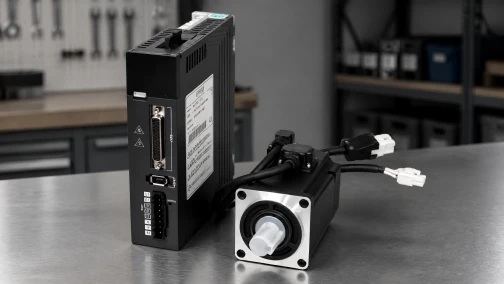
If you build or upgrade VFFS baggers, flow wrappers, cartoners, fillers, cappers, or labelers, the servo decisions you make on each axis set the machine's speed ceiling, its accuracy, and a large share of its parts cost. Cymotorix supplies servo motors and drives to packaging machine builders worldwide. This guide walks through the choices that matter: which motor goes on which function, how to size it for cyclic duty, and how to pick the drive that keeps every axis in sync.
Here is the short version. Servo motors are used in packaging machinery wherever a mechanism must reach a precise position on a repeating cycle: film pulling, cross-sealing, filling, cutting, indexing, and labeling. They replace fixed cams, clutches, and air cylinders with programmable motion, which raises throughput and turns a format changeover into a software task.
Servo Selection by Packaging Function
The right motor depends on what the axis actually does. Below is how the common functions break down and what drives the choice on each one.
Film Feed and Web Transport
The film-pull or web-feed axis unwinds packaging film and positions it for each bag or pack. It runs near constant speed with short accelerations at every index, so continuous (RMS) torque usually decides the motor, not peak torque. Registration matters here: the servo reads the print mark, or eye mark, and corrects film position so graphics land in the same spot each cycle. A 60 mm to 80 mm servo handles most VFFS and flow-wrap film drives. Pair it with a drive that has a print-mark registration input.
Cross-Seal and Jaw Axes
Sealing jaws close on the film, apply heat and pressure, hold for a set dwell, then open. A servo jaw lets you program the closing position, the dwell time, and, on the better drives, a torque limit so the jaws grip delicate film without crushing product in the seal. This is the axis where servo control clearly beats pneumatics: you get a repeatable seal force and a soft approach that protects thin films. Continuous-motion rotary sealers need smooth high-speed rotation; box-motion sealers need fast reciprocating strokes with strong acceleration, so size those for peak acceleration torque.
Filling and Dosing
Auger fillers, piston fillers, and pump fillers meter product by rotating or stroking a precise amount. Dose accuracy comes straight from position accuracy, so a servo with a high-resolution encoder pays off in less overfill and giveaway. Powder and granule augers typically run a 60 to 110 mm servo depending on auger size and product. Sticky, high-viscosity products need more torque; size for the worst-case starting torque of a loaded auger, not the running torque. Viscous fillers often move up to a 110 mm servo.
Cutting, Rotary Knife, and Cross-Cutter
Cut-to-length and rotary-knife axes synchronize a blade to the moving web. The servo runs an electronic cam locked to film speed, accelerating the knife to web speed at the cut point and slowing between cuts. These axes see sharp torque spikes at each cut, so peak torque and a stiff, low-inertia motor matter more than the continuous rating.
Indexing, Carousels, and Turrets
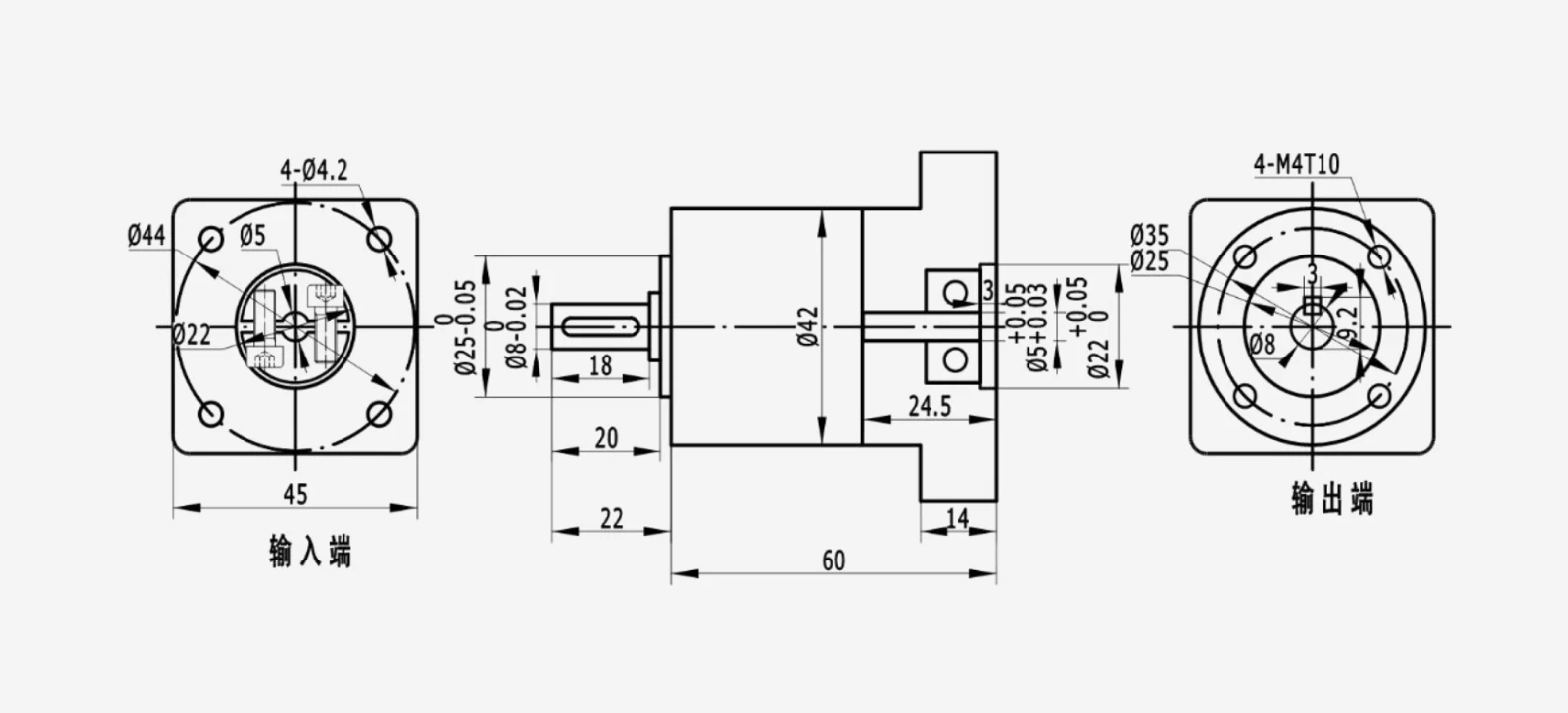
Rotary index tables move cappers, labelers, and rotary fillers from station to station: accelerate, stop, dwell, repeat. This start-stop pattern is torque-hungry during acceleration and idle during dwell, so peak acceleration torque and inertia matching decide the motor. Heavy capping and labeling turrets carry large load inertia; a 130 mm servo with a planetary gearbox keeps the reflected inertia and the tuning under control.
Labeling and Print Registration
Label applicators dispense and place labels at line speed, matching label pitch to product spacing. Response and accuracy matter more than raw torque because the loads are light. A small-frame 40 to 60 mm servo with a responsive drive and clean registration gives tight placement without paying for torque you will not use.
Linear, Lift, and Low-Voltage Axes
Pushers, elevators, and diverters need linear thrust and a repeatable stop. An integrated ball screw servo combines the motor and screw in one unit, so you position the load directly without building a separate screw-and-coupling assembly. For battery-powered lines, mobile fillers, and equipment fed by AGVs, a low-voltage servo runs on a 24 to 48 V DC bus instead of AC mains, which suits portable and vehicle-mounted packaging gear.
Sizing Servo Motors for Cyclic Packaging Duty
Packaging axes rarely run at steady load. They accelerate, hold, decelerate, and dwell many times a minute, so sizing has to cover the whole cycle, not one snapshot. This is the sequence we use.
1. Define the motion profile. Write down the move distance, the time allowed, and the dwell for each cycle. That gives you the required speed and acceleration. At 120 cycles per minute you have half a second per cycle to move and settle.
2. Add up reflected inertia. Every rotating part, from the coupling and screw to the gearbox, turret, and product, reflects inertia back to the motor shaft. Screw lead and gear ratio change it a lot. A coarser screw lead reflects more inertia, and a gearbox divides reflected inertia by the square of its ratio, so a 5:1 gearbox cuts reflected load inertia to one twenty-fifth.
3. Keep the inertia ratio sensible. For responsive packaging motion, aim for a load-to-motor inertia ratio of 5:1 or lower. Up to 10:1 works on gentler axes. High ratios make the servo loop hard to tune and cause overshoot at the exact moment you want a clean stop. If the ratio is too high, add a gearbox or pick a motor with higher rotor inertia.
4. Size on RMS torque, then check peak. The motor's continuous torque must exceed the cycle's RMS heating torque, and its peak torque must clear the highest acceleration spike. Most servos deliver two to three times rated torque for short bursts, so read the torque-speed curve at your actual running speed, not just the standstill figure. Sizing on peak alone is the classic mistake: the motor moves the load fine in a demo, then overheats at production cycle rates.
5. Add margin for duty and heat. Leave headroom for continuous shifts and a warm cabinet. High ambient temperature inside a packed control enclosure lowers what the motor can dissipate, so derate or step up a frame if the machine runs hot.
Recommended Servo Frame Sizes by Packaging Function
| Packaging Function | Servo Frame Size | Sizing Basis | Notes |
| Label applicator, light index | 40 to 60 mm | Response and accuracy | Light load; low inertia wins |
| Film feed / web transport | 60 to 80 mm | Continuous (RMS) torque | Needs print-mark registration |
| Cross-seal jaws (box motion) | 80 to 110 mm | Peak acceleration torque | Torque-limited close for thin film |
| Auger / piston filler | 60 to 110 mm | Worst-case start torque | More torque for viscous product |
| Rotary knife / cross-cutter | 80 to 110 mm | Peak torque, low inertia | Electronic cam to web speed |
| Index table / capping turret | 110 to 130 mm + gearbox | Inertia match and accel | Gearbox cuts reflected inertia |
| Case packer / cartoner main drive | 130 to 180 mm | RMS plus peak | Coordinated multi-axis motion |
| Linear push / lift / diverter | Ball screw servo | Thrust and duty | Integrated screw for positioning |
| Battery-powered / mobile line | Low-voltage servo | Supply voltage | 24 to 48 V DC bus |
Servo, Stepper, or Pneumatic: Picking the Right Actuation
Not every packaging axis needs a servo. Matching the actuator to the job keeps cost down without hurting performance.
Servo motors suit high-speed, high-accuracy, and variable-format axes: sealing jaws, registration film feed, fast indexing, and anything you reformat often. They cost more up front and need tuning, but they raise throughput and cut changeover time.
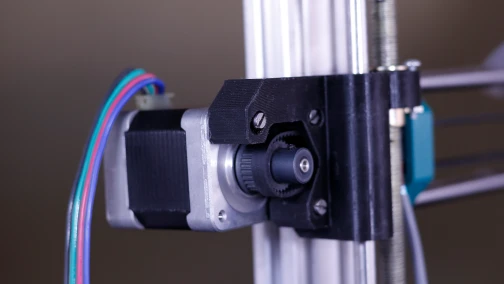
Stepper motors, including closed-loop versions, are a solid lower-cost fit for slower, steady axes with predictable load, such as simple feed rollers, low-speed indexers, and auxiliary positioning. A closed-loop stepper adds stall detection and runs cooler than an open-loop one, which closes much of the reliability gap on light-duty packaging tasks.
Pneumatics still make sense for simple two-position moves, like a pusher that just extends and retracts. On any axis that needs a controlled force, a repeatable position, or format flexibility, a servo replaces the air cylinder and removes the leak-and-adjust maintenance that comes with compressed air. Servo axes also draw power only while moving, so energy use on a converted VFFS machine drops sharply against a compressor that runs all day.
Drives, Registration, and Line Synchronization
The drive turns your controller's commands into coordinated motion, and on a packaging line the axes have to work together. Points that matter when you spec the drive:
Current and voltage match. The drive's continuous and peak current must exceed the motor's rated and peak current. Confirm the DC bus voltage suits your supply. Higher bus voltage gives better torque at speed, which helps fast seal and cut axes.
Communication protocol. Multi-axis packaging machines coordinate over a real-time bus, and EtherCAT and PROFINET are the common choices. Pick a drive that speaks your controller's protocol so film feed, sealing, and cutting stay phase-locked.
Electronic cam and gearing. Registration film feed, rotary knives, and flying-cutoff axes run electronic cam or gearing profiles that lock one axis to another in software. This replaces mechanical line shafts and lets you change the cam for a new format without touching hardware.
Registration input. For printed film, the drive needs a fast mark-sensor input so it can nudge each cycle and keep print in register. Without it, graphics drift over a run.
Cable runs. Long motor cables drop voltage and cut available torque. On runs over about 20 meters, check the drop and upsize the cable or drive. Single-cable servo systems, which carry power, feedback, and brake in one line, reduce wiring and cabinet space on machines with many axes.
Cymotorix RA3 and RS3 servo drives cover single- and multi-axis packaging builds with the registration and bus options these machines need.
Built for the Packaging Environment
Packaging floors are wet, dusty, and run around the clock, so the motor has to survive more than the motion. A few practical notes:
Ingress protection. Food and beverage lines wash down. Specify an IP65 or higher motor for washdown zones, and keep connectors and cable glands sealed. Dry goods and secondary packaging can run lower IP ratings.
Heat. Servos run cooler than open-loop steppers because current tracks load, but a crowded enclosure still traps heat. Leave airflow around the drives and derate for high ambient temperature.
Duty and life. Packaging axes cycle constantly, so size for the real production duty cycle: intermittent for indexers, closer to continuous for conveyors. Sizing for a light test cycle and then running a heavy production cycle is what burns motors out early.
Get a Servo Solution Matched to Your Packaging Machine
Cymotorix supplies complete servo packages, motor, drive, and cable, configured for VFFS, flow-wrap, filling, capping, labeling, and case-packing machines. Our engineers size each axis from your motion profile, load inertia, and cycle rate, and we match frame sizes across the machine so you are not overspending on one axis and undersizing another. Whether you are prototyping a new format or scaling a proven design into volume, we deliver consistent quality at OEM pricing.
Send us your machine layout and cycle targets. We will recommend a per-axis servo and drive configuration within 24 hours.
Frequently Asked Questions
What size servo motor do I need for a packaging machine?
It depends on the function. Label applicators and light indexers use 40 to 60 mm servos; film feed and web transport use 60 to 80 mm; sealing jaws, fillers, and rotary knives use 80 to 110 mm; and heavy index turrets and case packers use 110 to 180 mm, often with a gearbox. Size each axis from its motion profile, reflected inertia, and cycle rate rather than one rule of thumb.
Servo or stepper motor for packaging machines, which is better?
Use servos on fast, high-accuracy, or frequently reformatted axes like sealing jaws and registration film feed. Steppers, especially closed-loop steppers, are a cost-effective choice for slower steady axes with predictable loads. Many machines mix both to balance cost and performance.
What inertia ratio should I target for packaging servos?
Aim for a load-to-motor inertia ratio of 5:1 or lower for responsive, high-speed motion. Up to 10:1 is workable on gentler axes. If your ratio is higher, add a gearbox, which cuts reflected inertia by the square of the ratio, or choose a motor with higher rotor inertia.
Can I retrofit a pneumatic packaging machine with servo motors?
Yes, and it is common. Replacing air cylinders on seal jaws, pushers, and indexers with servo axes gives repeatable force and position, easier format changes, and lower energy use since the servo draws power only while moving. Plan for a drive, controller integration, and updated wiring.
Why do servo motors overheat on packaging machines, and how do I prevent it?
The usual cause is sizing on peak torque instead of RMS torque, so the motor runs hot at production cycle rates. Size on RMS torque for the real duty cycle, give the drive and motor airflow, use idle-current reduction where the drive supports it, and derate for a hot enclosure.
What drive features matter for a packaging line?
Look for current and voltage headroom over the motor rating, a real-time bus that matches your controller such as EtherCAT or PROFINET, electronic cam and gearing for synchronized axes, and a fast registration input for printed film. Single-cable support reduces wiring on multi-axis machines.
-

Cymotorix
Stepper Motor & Servo Motor Manufacture
Cymotorix is a China-based motor manufacturer with 20+ years of experience producing hybrid stepper motors, AC servo motors, and matched drivers for OEM customers worldwide.